
Redang Island: Beaches, Snorkelling and Diving — the Complete Guide (2026)
Key facts
Complete guide to Redang Island (Terengganu): access from Kuala Terengganu and Merang, real season and resort closures, where to stay in Pasir Panjang and Teluk Dalam, snorkelling and diving site by site, four-day budget and mistakes to avoid.
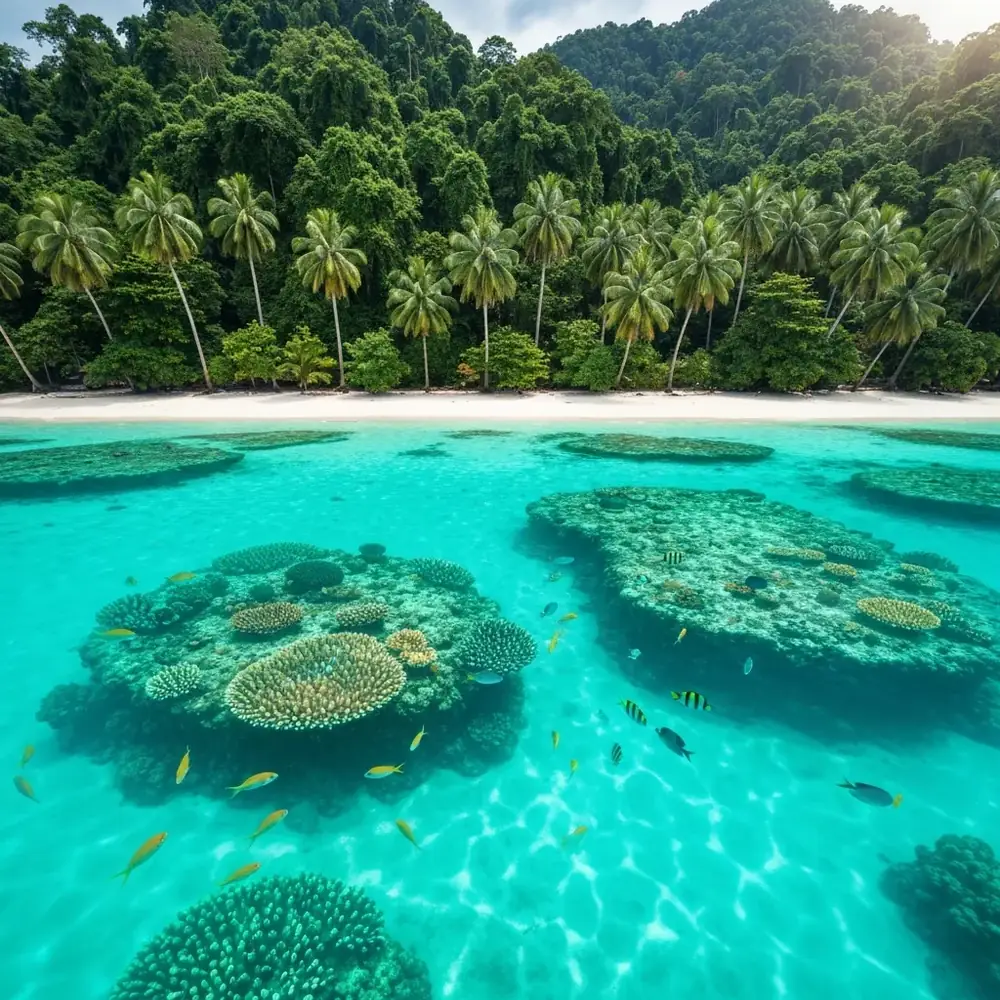
Redang is Malaysia's postcard: transparent turquoise water, white sand, coral reefs a few metres from the shore, and an island that lives almost entirely for beach tourism. It is also an island with very concrete constraints — a strict season, full-board accommodation as the norm, ferry access from Terengganu, and exceptional diving concentrated on a handful of sites.
This guide covers how to get to Redang, when to go, where to stay by budget, what the snorkelling trips are really worth, the cost of a four-day stay and the pitfalls to avoid. If you are still deciding between the east-coast islands, first compare Perhentian, Redang and Tioman: they look alike in photos and are very different on the ground.
Where Redang is and how to get there
Redang (Pulau Redang) lies about 45 km off Kuala Terengganu, in the state of Terengganu on the east coast of peninsular Malaysia. The island covers roughly 25 km² and rises to 359 m. It sits inside the Taman Laut Pulau Redang, a marine park protected since 1994: fishing is banned and the coral is preserved, which explains the water clarity.
Two access routes, both via the mainland:
- Ferry from Shahbandar jetty (Kuala Terengganu), about 1 h 15 crossing. It is usually included in hotel packages; otherwise budget 55–70 MYR each way.
- Speedboat from Merang, about 45 minutes. Many mid-range properties run transfers from their own jetty in Merang.
To reach Kuala Terengganu from the capital, allow 7–8 hours by road (around 450 km), a one-hour Kuala Lumpur–Kuala Terengganu flight, or an overnight bus. Our transport service covers private transfers from Kuala Lumpur, Kuala Besut and Terengganu airport — this is usually where independent travellers lose the most time.
Note: the island has no commercial airport for regular international flights; most travellers come via Kuala Terengganu or Merang.
When to go to Redang: the season is a constraint, not a detail
Malaysia's east coast has far stronger seasonality than the west. In Redang, most resorts close from late October to late February during the north-east monsoon: rough seas, heavy rain, degraded dive visibility, suspended ferries.
The usable window runs from March to October, with the best water from May to September:
- March–April: gradual opening, warm water (29–30 °C), still reasonable rates, a few rainy days.
- May–July: the best overall conditions, 15–25 m visibility, calm seas. Also the peak rate season.
- August–September: still excellent, a little busier with Malaysian school holidays in August.
- October: end of season, conditions still decent early in the month, resorts starting to close.
Avoid November–February entirely: most properties are shut and the sea does not allow boat trips.
Where to stay in Redang by budget
Redang operates almost exclusively on full-board packages (three-night minimum, meals and snorkelling included). That is disorienting if you are used to room-only bookings, but it is how the island works: few independent restaurants, no nightlife outside the resorts.
| Category | Property type | Indicative budget / person / 3 nights |
|---|---|---|
| Budget | Simple chalets, Pasir Panjang | 550–850 MYR |
| Mid-range | 3–4 star resorts, Pasir Panjang / Teluk Kalong | 1,100–1,800 MYR |
| High-end | 5 star resorts, Teluk Dalam | 2,500–4,500 MYR |
Which beach to stay on:
- Pasir Panjang ("long beach"): the liveliest, white sand, snorkelling straight off the beach, most mid-range properties.
- Teluk Dalam: the northern bay, calm water, high-end resorts, fine-sand beach.
- Teluk Kalong: quieter, good for families.
To compare available properties on the island and on the mainland, our hotels page lists options by area.
Snorkelling and diving: what Redang really offers
Redang is one of the best dive destinations in peninsular Malaysia. Sites are 10–30 minutes by boat and visibility is regularly 15–25 metres in the dry season.
Snorkelling (included in most packages)
- Pulau Lima, Pulau Paku, Pulau Pinang: shallow coral gardens (2–6 m), parrotfish, clownfish, occasional turtles.
- Shark Point (Teluk Dalam): blacktip reef sharks, harmless, visible at 3–5 m — the classic photo stop.
- Marine Park (Pulau Pinang): protected zone with a pontoon, busy, but ideal for beginners.
Scuba diving
- Budget 120–180 MYR per dive on a trip, or a 4–6 dive package at 400–600 MYR.
- Best-known sites: Terumbu Tiga, Pulau Ekor Tebu, and the shallow wrecks north of the island.
- Dive centres are concentrated in Pasir Panjang; a PADI Open Water course over 3–4 days costs about 1,300–1,700 MYR.
Worth knowing: Redang's coral has suffered from warming-related bleaching (2010 and 2016 episodes). The gardens closest to shore are less spectacular than fifteen years ago; the best sites require a boat trip.
Real budget for four days in Redang
Based on a standard mid-range package (3 nights, full board, ferry included) plus extras:
| Item | Amount (MYR) |
|---|---|
| 3-night package + meals + 2 snorkelling trips | 1,300–1,700 |
| Return transfer Kuala Lumpur → Merang | 200–320 (bus) or 400–600 (flight + transfer) |
| Scuba diving (2 dives) | 240–360 |
| Drinks and extras | 80–150 |
| Marine park and local taxes | 30–60 |
Total: roughly 1,850 to 2,600 MYR per person (€370–520) for four days, excluding international flights. Redang is noticeably more expensive than Perhentian at equivalent comfort — the price of isolation and all-inclusive packages.
Neighbouring islands: combining Redang with something else
Redang is not suited to free-form island hopping: inter-island trips are organised and limited.
- Pulau Perhentian (about 1 h 30 by boat): more backpacker-oriented, more independent restaurants, equivalent snorkelling. See our guide diving and snorkelling in Perhentian and Tioman.
- Pulau Lang Tengah: a small island between Redang and Perhentian, only two resorts, very quiet.
- Kuala Terengganu: worth half a day before or after the ferry — Crystal Mosque, central market, Chinatown.
Our islands and ferries page details east-coast connections, timetables and boat bookings.
Common mistakes in Redang
- Booking in November or December: most resorts are closed and the sea is unusable.
- Expecting à la carte restaurants: outside the resorts there is almost nothing. Full board is not a marketing gimmick, it is a logistical necessity.
- Expecting a "village" atmosphere: Redang has no lively village like Perhentian Kecil; it is a resort island.
- Neglecting sun protection: the sun is fierce and standard sunscreens are banned in some marine park zones — bring reef-safe mineral protection.
- Underestimating transfers: Kuala Lumpur → Merang is 7–8 hours by road. A domestic flight costs more but saves a full day.
FAQ
What is the best time to visit Redang?
May to September for the best sea conditions and visibility. March–April and October are workable but less predictable. The island is closed from November to February.
How many days should you stay in Redang?
Three nights (four days) is the standard package format and enough for two snorkelling trips, a dive and some beach time. Five days suits divers who want to work through several sites.
Redang or Perhentian?
Redang for comfort, very clear water and all-inclusive resorts; Perhentian for budget, relaxed vibe and more dining choice. Both are reached from Terengganu.
Should you book the ferry in advance?
Yes in high season (June–August): ferries from Shahbandar leave at fixed times and fill up. Most packages include the crossing — check before booking your land transfer.
Can you dive without experience in Redang?
Yes. A "discover scuba diving" session (half a day, one guided dive) costs around 200–250 MYR and requires no certification.
How to build a realistic Redang plan
The most common planning error is to treat Redang as a day trip from Kuala Lumpur. It is not: the island sits 450 km north-east of the capital and the whole point of the stay is the package rhythm — arrive by midday ferry, snorkel in the afternoon, dive the next morning, leave on the last morning boat.
A realistic four-day plan looks like this:
- Day 1: early departure from Kuala Lumpur (flight or 06:00 bus), ferry around 13:00, check-in, first swim off the beach.
- Day 2: morning snorkelling trip (three stops), afternoon at Shark Point, evening at the resort.
- Day 3: two scuba dives in the morning for certified divers, or a discovery dive for beginners, then beach time.
- Day 4: early ferry back, transfer to the airport or onward bus.
If you only have three days, drop the diving and keep two snorkelling trips — the water is the reason you came, not the resort facilities. If you have five days, add Pulau Lang Tengah as a day trip or a second diving package.
Travelling with children or as a couple
Redang works well for families because everything is on site and the shallow water off Pasir Panjang is calm, but there are two caveats: the ferry crossing can be rough in shoulder season (March and October), and most resorts offer limited entertainment for teenagers. Teluk Kalong and Teluk Dalam are the quieter options; Pasir Panjang has more life.
For couples, the high-end resorts of Teluk Dalam offer the most privacy, but you pay for the isolation: there is nothing outside the property, so a week can feel long if you like to walk and explore. Four nights is the sweet spot for most visitors.
Connectivity, money and practicalities
- Cash: there is no ATM on the island. Bring ringgit from Kuala Terengganu or Merang; resorts accept cards but with occasional network failures.
- Mobile signal: decent on Pasir Panjang (4G), patchy in Teluk Dalam. Download offline maps and your ferry tickets before boarding.
- Alcohol: available in resorts but expensive — the east coast is conservative and Redang has no duty-free status.
- Dress code: swimwear on the beach is fine; cover up when walking through resort common areas out of respect for local staff and Muslim guests.
- Insurance: check that your policy covers boat transfers and diving; standard travel insurance often excludes scuba below 18 metres unless you add a rider.
Related procedures
📋 Before you go
- Transportation in Malaysia
- Local SIM card
- Driving in Malaysia with a foreign licence if you rent a car to Merang
👉 Planning an east-coast island trip (Redang, Perhentian, Tioman) and need a private transfer Kuala Lumpur → jetty or a boat booking? Contact us or see our islands and ferries service.
Things to do in Redang
Tickets and experiences at the best price — instant online booking. All activities →
Snorkeling Day Trip Tour in Pulau Redang, Kuala Terengganu
Explore the stunning waters of Pulau Redang on a snorkeling day trip from Kuala Terengganu. Discover vibrant coral reefs, tropical marine life, and pristine island beaches in one unforgettable adventure. 🐠.
Where to stay in Redang
BonjourMalaisie selection — the best-rated for this stay. See all hotels →
Don't miss the next guides
One email every 15 days: new itineraries, tested addresses and Malaysia deals. Nothing else.
No spam. One-click unsubscribe, anytime.
Ready to explore Malaysia?
Book your transfer, plan your trips and find the right contacts.
This guide was written with the assistance of AI, then reviewed and corrected by a member of the team before publication.
You may also like
Tioman: The Complete Guide to Beaches, Snorkelling and Diving (2026)
A Tioman trip in 2026: ferry from Mersing, villages (Tekek, ABC, Salang, Juara), snorkelling and dive sites, real ringgit budget, weather and traps to avoid.
Diving and Snorkelling in Perhentian and Tioman: The Complete Guide
The complete guide to diving and snorkelling in Perhentian and Tioman: which island to choose, best season, must-dive sites, real 2026 prices, where to stay and how to get there from Kuala Lumpur.
Penang in 2026: Night Markets, Street Food and Beaches — The Complete Guide
Hawker centres, night markets, UNESCO-listed George Town and Batu Ferringhi beaches: the complete 2026 Penang guide — where to eat, where to stay, what to budget.