
Diving and Snorkelling in Perhentian and Tioman: The Complete Guide
Key facts
The complete guide to diving and snorkelling in Perhentian and Tioman: which island to choose, best season, must-dive sites, real 2026 prices, where to stay and how to get there from Kuala Lumpur.
Diving and Snorkelling in Perhentian and Tioman: The Complete Guide
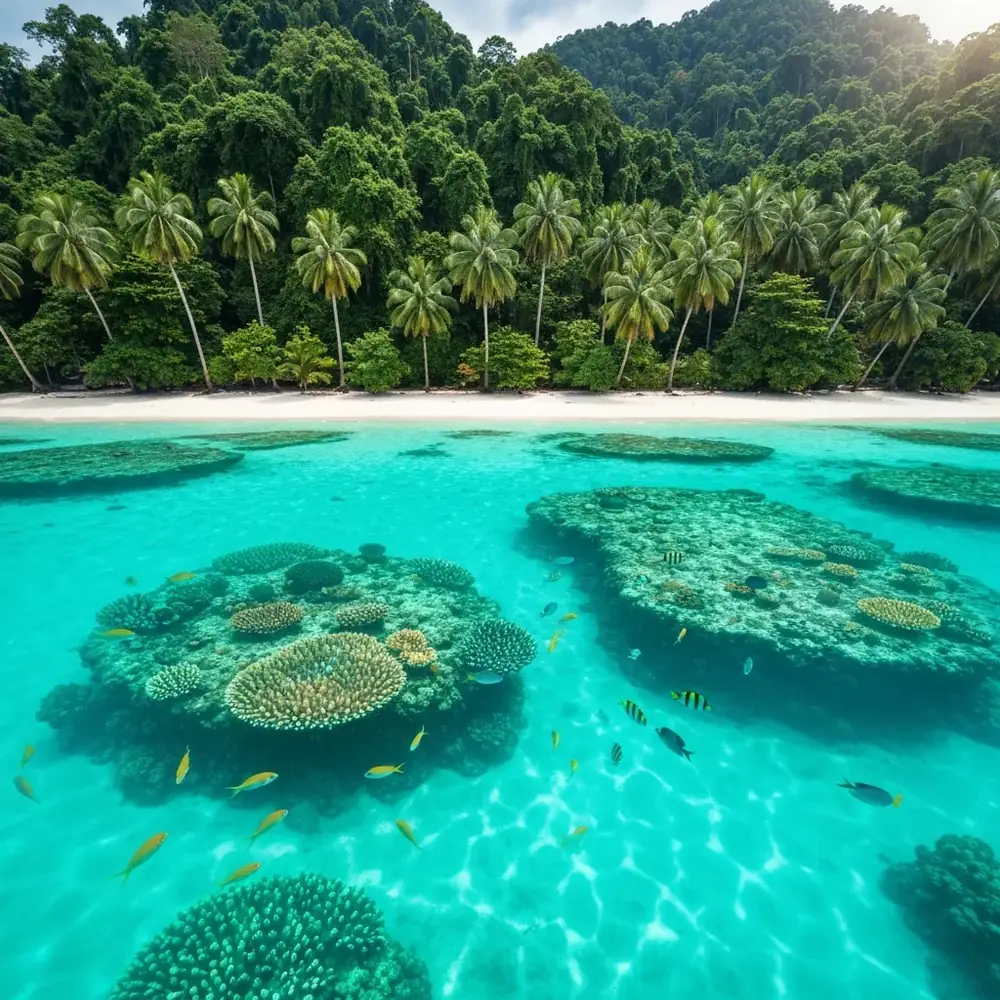
Perhentian and Tioman are the two faces of Malaysian diving on the peninsula side. Two islands, two atmospheres, one shared promise: living coral reefs, warm water all year round (28-30 °C), visibility that regularly reaches 20 to 30 metres, and turtles grazing on the seagrass beds just a few strokes from the shore. For a traveller, it is Southeast Asian diving without Maldives prices or Koh Tao crowds.
This guide answers the questions everyone asks before booking: which island should you choose, what is the best season, do you need a licence, what budget should you plan for, where should you stay, and how do you get there? We cover the must-dive sites, the snorkelling spots reachable straight from the beach, dive centres, real 2026 prices and the logistics from Kuala Lumpur. To plan the rest of your trip, also see our guide to the east coast islands, our Perhentian destination page and Tioman destination page.
Perhentian or Tioman: how to choose
The two archipelagos are often compared, but they do not suit exactly the same traveller.
Perhentian (Terengganu state, about 20 km from Kuala Besut) is a paradise for beginner and intermediate divers. Two main islands: Perhentian Besar (the big one, quiet, family-oriented, mid to high end) and Perhentian Kecil (the small one, lively, backpacker, with Long Beach and Coral Bay). Dive sites are 5-15 minutes away by boat, so you can do two morning dives and be back for lunch. It is also the only one of the two with several French-speaking PADI centres.
Tioman (Pahang state, about 55 km from Mersing) is larger, more rugged, more "jungle". It was used as a location for the film South Pacific, and its summit, Gunung Kajang (1,038 m), is covered in primary forest. The villages of Salang, ABC (Air Batang), Tekek and Juara dot the west coast. Tioman is known for the quality of its coral formations, its shallow wrecks and its more authentic, less "resort" atmosphere.
In short: choose Perhentian for a first diving trip, a wide choice of centres and simple logistics; choose Tioman for more varied dives, a larger island to explore and a more natural stay. Both work perfectly for five to seven days on site.
The best season
This is the non-negotiable point: the east coast of the Malay peninsula runs on the monsoon, and both islands are closed for part of the year.
- Ideal season: March to October, with optimal conditions peaking between April and September. Maximum visibility, calm sea, almost no rain.
- Late October to February: northeast monsoon season. Most Perhentian resorts and dive centres close, and many sea crossings are suspended. Tioman stays open more of the year, but conditions deteriorate sharply from November to February (murky water, swell, visibility down to 5-10 m).
- July-August: peak season, best conditions but also the biggest crowds and highest prices. Book accommodation and transport two to three months ahead.
- April-May and September-October: the ideal compromise — good conditions, moderate crowds, gentler prices.
If you want to combine with other stops, note that the west coast (Langkawi, Penang) follows the opposite calendar: it is at its best from November to March. A combined west coast + east coast itinerary therefore needs to be planned around the season.
The must-dive sites
Around Perhentian
- Tokong Laut (Temple of the Sea) — Perhentian's legendary site. A rocky pinnacle rising to 20 metres, covered in soft coral, teeming with parrotfish, batfish and regularly visited by blacktip reef sharks. For experienced divers; the current can be strong.
- Batu Nisan — a deep drop-off (down to 40 m) with superb gorgonian fans. For Advanced divers and above.
- Turtle Point (Tanjung Teluk Kerma) — a turtle cleaning station. A near-guarantee of seeing several, at shallow depth. Also ideal for snorkelling.
- Sugar Wreck — the wreck of a 90-metre cargo ship resting on an 18-metre seabed, accessible by diving and partly by freediving. One of the few wreck sites open to beginners.
- D'Lagoon / Sebelah Kecil — sheltered sites, perfect for Discover Scuba Diving and first dives.
Around Tioman
- Chebeh Island — probably Tioman's best site: large granite boulders, healthy hard coral, Napoleon wrasse, occasionally leopard sharks. Depth 12-30 m.
- Tiger Reef (Batu Malang) — an offshore reef known for its barracuda schools and turtles.
- Renggis Island — a small islet right off Tekek, the island's best snorkelling spot. Shallow, very rich, accessible to all.
- Soyak Island — a shallow reef covered in soft coral, often chosen for a night dive.
- Magician Rock / Labas — for experienced divers, with currents and pelagic life.
- The MV Sawadee wreck — a small fishing boat deliberately sunk, resting between 12 and 22 metres, colonised by scorpionfish and groupers.
Most centres include equipment and offer two-dive trips (morning) or one afternoon dive, plus an optional night dive.
Snorkelling: the option without a licence
You do not need to be certified to enjoy the reefs. This is in fact one of the region's great advantages: the richest snorkelling sites are often just 50 metres from the beach.
On Perhentian, the best shore-accessible spots are Coral Bay (Perhentian Kecil, sunset side), Turtle Beach (where green turtles graze the seagrass in late afternoon) and the beach on Perhentian Besar in front of the resorts. By boat, a three-to-four-hour snorkelling trip (3-4 stops) costs around 40-60 MYR per person, equipment included.
On Tioman, Renggis Island and the waters around Salang and ABC offer reefs immediately accessible from shore. Expect 40-70 MYR for a half-day boat snorkelling trip.
Two golden safety rules: never touch coral (it dies on contact), and never chase turtles — they are protected and disturbance drives them away from the seagrass beds. A UV shirt or "reef-safe" sunscreen is essential: conventional sunscreens contain filters that bleach coral.
Do you need a licence or certification
For snorkelling, no certification is required. For scuba diving:
- Discover Scuba Diving: a half-day introduction, no prior certification, from 150-200 MYR (equipment and instructor included). The best way to try before committing.
- Open Water Diver (PADI, SSI or RAID): the 3-4 day course that allows you to dive to 18 metres. Expect 1,100-1,500 MYR on Perhentian, 1,200-1,600 MYR on Tioman. Fees generally include equipment, sea dives and certification.
- Advanced Open Water: 2-3 days, from 1,000-1,300 MYR, required for deep sites (Batu Nisan, Chebeh).
- Fun dives (certified divers): 70-120 MYR per dive, with discounts on 5 or 10-dive packages.
Plan for a medical certificate (or a signed health declaration) if you are over 45, have asthma, a cardiac history or take certain medications. Centres provide the medical form, to be signed by a doctor before arrival if necessary.
It is strongly recommended not to dive within 18 to 24 hours before a flight (especially a long-haul flight). Organise your return to Kuala Lumpur accordingly.
Where to stay
Perhentian Kecil (the small one): the backpacker option. Long Beach concentrates basic guesthouses and beach bars (fan rooms from 40-80 MYR, air-conditioned from 120 MYR). Coral Bay is quieter, sunset-oriented. Note: some of the cheapest accommodation has no hot water or air conditioning, and power may be limited during the day.
Perhentian Besar (the big one): mid and high-end resorts, often full board. Expect 150-400 MYR per night depending on standard. Ideal for families and couples.
Tioman: the villages of Salang (liveliest, diving and snorkelling on the doorstep), ABC/Air Batang (quiet, good dive base) and Tekek (the "centre", with the airport, a duty-free shop and stores). Expect 80-150 MYR for a decent room, 250-500 MYR for a beachfront resort. Juara, on the east coast, is more isolated and reached by water taxi or by road through the jungle.
Book through our hotels section, or favour resorts that include meals: on the small islands, restaurant choice is limited and prices higher than on the mainland.
How to get there
To Perhentian: the departure point is Kuala Besut (Terengganu). From Kota Bharu (Sultan Ismail Petra airport, code KBR), allow 1 to 1h15 by road. From Kuala Terengganu, about 2 hours. The public boat to Perhentian leaves Kuala Besut between 8 am and 5 pm, a crossing of about 30-40 minutes, 70 MYR return (plus a 30 MYR marine park conservation fee, valid for the archipelago).
To Tioman: two options. By boat from Mersing (Johor), 2 to 3.5 hours depending on your final destination on the island, 70-90 MYR return. By air: SKS Airways connects Tioman airport (TOD) from Subang (SZB) seasonally — check dates, the route is not permanent.
From Kuala Lumpur: allow 5 to 7 hours by road to Kuala Besut or Mersing. The simplest option, especially with family or dive gear, is a private transfer with driver from KL, with hotel pickup and drop-off directly at the jetty. See our transport page and our transfers.
On the islands themselves, there are no roads on Perhentian: you get around on foot, by water taxi (5-20 MYR depending on distance) or by kayak. Tioman has a concrete road along the west coast, between Tekek, ABC and Salang (drivable by scooter or 4x4).
Budget and planning
For a week of diving on Perhentian or Tioman in 2026, here is a realistic estimate per person:
- Private transfer return from Kuala Lumpur: 700-1,000 MYR (split if you are several)
- Island boat return: 70-90 MYR (+ 30 MYR marine park fee on Perhentian)
- Accommodation (6 nights, mid-range): 480-900 MYR
- Meals: 40-80 MYR per day
- 10-dive package (certified): 700-1,000 MYR
- Or Open Water certification: 1,100-1,500 MYR
- Equipment rental (if not included): 50-80 MYR per day
- Snorkelling trip: 40-70 MYR
Total for a "certified diver" week: around 2,500-3,500 MYR, excluding international flights. For a snorkelling and beach stay, expect 1,800-2,500 MYR. Prices are higher in peak season (July-August) and gentler in April-May and September-October.
Bring cash: ATMs are rare on the small islands (one at Tekek, one at Kuala Besut), and cards are often refused. Dive centres generally accept cards and transfers, but warungs and water taxis do not.
Equipment, safety and eco-responsibility
A number of habits make the difference between a good trip and a ruined one:
- Only dive with a certified centre (PADI, SSI, RAID, NAUI). Check that the instructor is properly registered, the equipment recent, and the ratio no more than 4 divers per guide.
- Dive insurance: most travel policies exclude diving beyond 18-30 m. Check the clauses, or take specific cover (DAN Asia, for example). Our health and life insurance page explains the basics.
- Book your room before arriving in high season: Perhentian accommodation is limited and full from June.
- Respect marine park rules: the Perhentian and Tioman archipelagos are protected marine parks. Fishing, collecting coral and shells, and anchoring on the reef are prohibited.
- Reef-safe sunscreen, a UV shirt, and no contact with wildlife. A simple but decisive step for reef survival.
- Avoid single-use plastics: bring a water bottle; many resorts offer filtered water stations.
- Altitude and flights: no diving within 18-24 hours before a flight, and no diving if you have a cold or congestion (risk of barotrauma).
📋 Related procedures
FAQ — Diving and snorkelling in Perhentian and Tioman
What is the best season to dive in Perhentian and Tioman?
March to October, with the best conditions from April to September (calm water, 20-30 m visibility). The Perhentian islands largely close from late October to February (northeast monsoon). Tioman stays open year-round, but conditions are poor from November to February.
Do you need a certification to dive?
Not for snorkelling. To dive, you can start with a Discover Scuba Diving session (150-200 MYR) without certification. To dive independently to 18 m, the Open Water Diver (1,100-1,500 MYR, 3-4 days) is required.
How much does a one-week diving trip cost?
Around 2,500-3,500 MYR per person for a certified-diver week (transfers, accommodation, meals, 10-dive package), excluding international flights. A more snorkelling-focused stay costs 1,800-2,500 MYR.
How do you get to Perhentian or Tioman from Kuala Lumpur?
Perhentian: drive to Kuala Besut (5-7 h), then boat (30-40 min, 70 MYR return). Tioman: drive to Mersing (5 h), then boat (2-3.5 h, 70-90 MYR return), or a seasonal flight from Subang. A private transfer with driver is the most comfortable option.
Can you see turtles?
Yes. On Perhentian, Turtle Point and Turtle Beach are cleaning stations where green turtles appear almost daily, even while snorkelling. They are protected: do not touch them and do not chase them.
👉 Need help organising your diving trip? Contact us
Ready to explore Malaysia?
Book your transfer, plan your trips and find the right contacts.
You may also like
Langkawi: Beaches, Islands and Budget
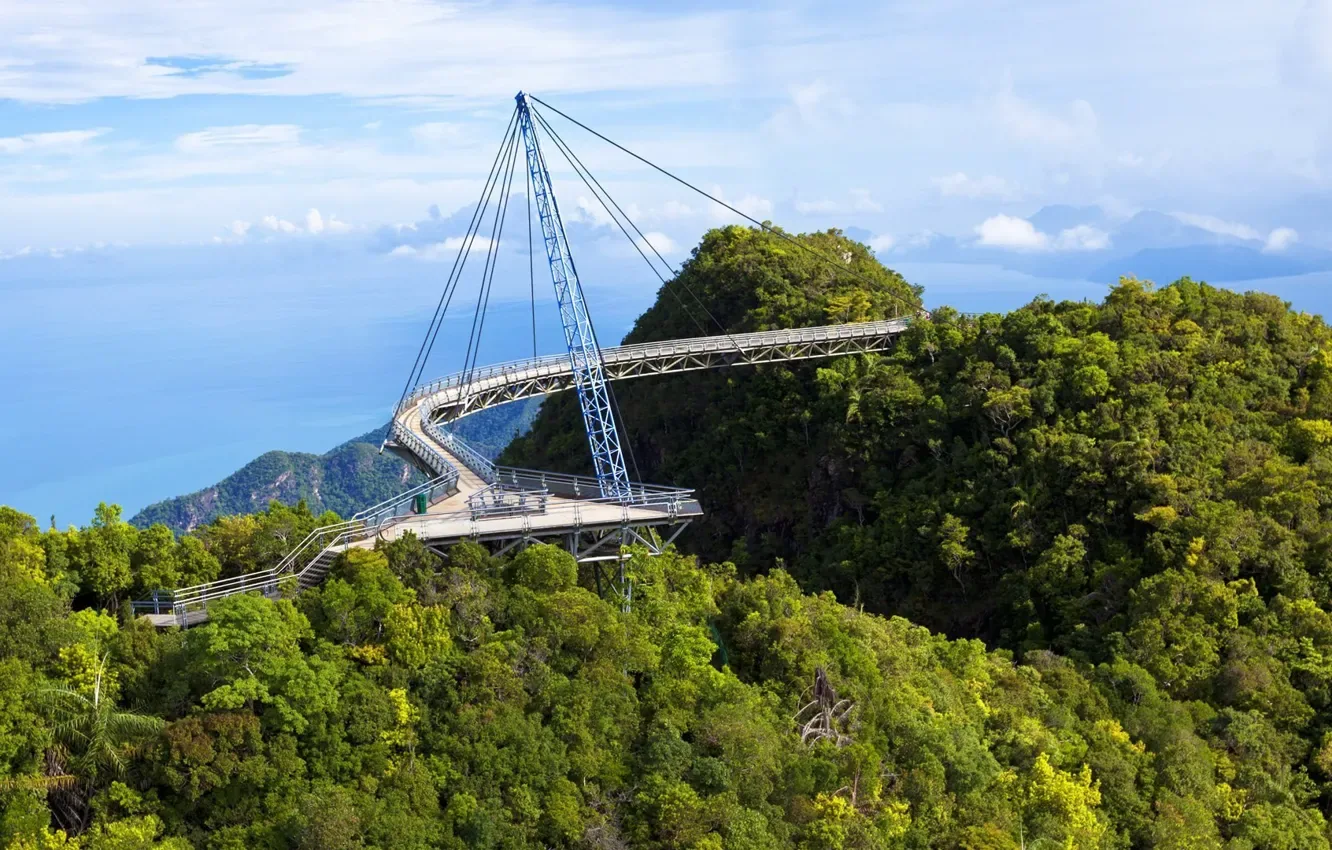
A complete guide to Langkawi: the best beaches (Cenang, Tengah, Tanjung Rhu), island hopping and the Kilim mangroves, the SkyCab cable car, real daily budget, weather and practical logistics to plan your trip.

Working in Malaysia as a Foreigner: Work Permits, Salaries and Hiring Sectors (2026)
Complete 2026 guide to working in Malaysia as a foreigner: Employment Pass categories, salary thresholds, sectors hiring foreigners, employer steps and real-world salaries.

Commissioner for Oaths in Malaysia: The Expat's Practical Guide
Commissioner for Oaths in Malaysia: what it is, what it costs (2026 fees), how to find one near you, the step-by-step procedure, the Wisma Putra apostille, and mistakes to avoid for expats.