
Tioman: The Complete Guide to Beaches, Snorkelling and Diving (2026)
Key facts
A Tioman trip in 2026: ferry from Mersing, villages (Tekek, ABC, Salang, Juara), snorkelling and dive sites, real ringgit budget, weather and traps to avoid.
Tioman is the island you have already seen in films without knowing it: the shape of a sleeping giant, primary rainforest, and warm water at 28 °C eleven months a year. It is also one of the few Malaysian islands you can reach by car all the way to the jetty, then by ferry for twenty minutes — no domestic flight, no two-day journey.
But Tioman needs planning. Between the villages spread over 20 kilometres of coastline, ferries whose schedules change with the monsoon, marine park fees and dive prices that vary by a factor of two between schools, a spontaneous trip easily costs 30 % more than an organised one. This guide gives real 2026 prices in ringgit, the villages to choose depending on your profile, snorkelling spots reachable from the beach, and the traps that ruin a first visit.
Whether you come to dive for two weeks or for a long weekend from Kuala Lumpur, you will find practical information here — transport, accommodation, budget — and first-hand advice.
Where Tioman is and how to get there
Tioman (Pulau Tioman) is the largest island off the east coast of the peninsula, in Pahang state, about 40 kilometres off Mersing. Twenty kilometres long and twelve wide, it is ringed by eight satellite islets and coral reefs protected as a marine park since 1994.
From Kuala Lumpur, two options:
1. Road + ferry via Mersing (the cheapest)
- Kuala Lumpur → Mersing: 4 h 30 to 5 h by road (350 km), by car or express bus (RM 45 to RM 60). Buses leave from TBS (Terminal Bersepadu Selatan).
- Mersing → Tioman: Blue Water Express ferry, 1 h 30 to 2 h depending on the stop, RM 70 to RM 90 one way in 2026.
2. Road + ferry via Tanjung Gemok — a variant north of Mersing, convenient if you come from Kuantan or Cherating. Similar prices, slightly shorter ferry crossing.
The ferry does not drop everyone at the same place: it calls at Genting, Paya, Tekek, ABC (Air Batang) and Salang in turn. State your village when buying the ticket, otherwise you will disembark at the wrong jetty and have to pay for a water taxi.
Schedules depend on the tide and the monsoon. In high season (March to October) expect three or four daily departures; in low season (November to February) one, and sometimes none for several days. Book the day before and check on the morning of departure: ferries cancel without notice in heavy swell.
If you would rather not drive the Mersing road — often busy with palm oil lorries — our transport in Malaysia page details private shuttles from Kuala Lumpur and KLIA airport, and our islands & ferries service handles the combined bus-ferry booking.
What about flying? Tioman airport (TOD) at Tekek receives 45-minute flights from Subang (Kuala Lumpur), operated by Berjaya Air in season, around RM 300 to RM 400 one way. Convenient, but flights are cancelled regularly: do not rely on them for a stay of less than four days.
Tioman's villages: which one to choose
Tioman is not a single homogeneous island: it is a succession of coastal villages linked by jungle trails or water taxi (RM 20 to RM 60 depending on distance). Your choice of village shapes the whole stay.
| Village | Atmosphere | Best for | Double room/night (2026) |
|---|---|---|---|
| Tekek | Main town, airport, clinic | Late arrivals, families, PADI courses | RM 180 – 350 |
| ABC (Air Batang) | Long beach, backpackers | Tight budgets, snorkelling from the beach | RM 80 – 180 |
| Salang | Lively north, bars, nightlife | Young travellers, diving, atmosphere | RM 120 – 250 |
| Paya | Malay village, quiet | Authenticity, local markets | RM 90 – 200 |
| Genting | Wild south, jungle | Hikers, off-grid stays | RM 100 – 220 |
| Juara | East coast, surf, turtles | Surfing, families, end of the road | RM 150 – 300 |
Tekek is the main arrival point: the island's only ATM (often out of order), the clinic, the jetty and most dive schools are there. Practical but noisy.
ABC (Air Batang) still offers the best value: a long white-sand beach, bungalows at RM 80, and a reef reachable by swimming 30 metres from the shore.
Salang is the liveliest village: beach bars, fish restaurants, reputable dive centres. Avoid it if you want silence.
Juara, on the east coast, is reached by a 7 km jungle trail or by boat. It is the only place on the island where you can catch waves, and a turtle nesting site between June and September.
If in doubt, spend two nights at ABC then two at Salang: you see both faces of the island without changing hotels three times. Our accommodation page lists available properties by date.
Snorkelling on Tioman: the good spots, and the overrated ones
This is the main reason to come. Tioman marine park holds more than 130 coral species and 400 fish species; green turtles, juvenile blacktip reef sharks, clownfish, batfish and, in season, eagle rays are all regularly seen.
The best spots reachable from the beach:
- ABC / Air Batang: soft coral reef 40 m offshore, 5 to 10 m visibility. Ideal for a first mask-and-snorkel session.
- Salang, by the jetty: a drop-off to 8 m, parrotfish, morays. The best free snorkelling spot on the island.
- Renggis Island (opposite Tekek): 15 minutes by boat, turtles almost guaranteed in season. Organised trips RM 60–90 per person.
Scuba sites — accessible with a certification or as a try-dive: Golden Reef, Coral Island, Chebeh, Labas (a wreck for advanced divers) and Tiger Reef. A two-tank trip costs RM 180 to RM 260 including equipment; a Discover Scuba Diving session RM 220 to RM 300.
What is overrated: the RM 120 "island hopping tours" sold everywhere, which string together five islets in three hours with 40 people per boat. Prefer 6-to-8-person trips, more expensive (RM 150–200) but incomparably better.
Our tours and activities service lets you book diving and snorkelling in advance, with schools we audit every season.
Do your PADI course here. An Open Water certification costs RM 1,100 to RM 1,400 over 3 days on Tioman, against RM 1,600 to 2,000 in Kuala Lumpur or at the Perhentians. Calm water and nearby sites make it one of the best places in Southeast Asia to learn.
Where to sleep and eat on the island
Accommodation. Tioman offers three very uneven categories:
- Budget bungalows (ABC, Salang, Paya): RM 80 to 150, fan, sometimes cold water. Adequate, no more.
- Mid-range resorts (Tekek, Juara): RM 250 to 450, air conditioning, pool, private beach.
- High end: only two properties on the island exceed RM 700 in peak season — book six to eight weeks ahead, especially around Malaysian school holidays (March, June, December).
Peak season (June–August, December) pushes prices up 40 %: booking in April or September gets you average rates with the same weather.
Eating. Food is poor and expensive in the most touristy villages. The good finds are elsewhere: family-run grilled fish restaurants at Paya and Juara (catch of the day RM 25–40), Tekek warung at lunchtime (nasi campur RM 10–15), and beach buffets at Salang in the evening.
Prices are 20 to 30 % higher than on the mainland: bottled water costs RM 3 (against RM 1.50 in Mersing). Many places do not take cards — bring cash, the Tekek ATM is unreliable.
More local recommendations on our restaurants page.
The real budget for a Tioman stay in 2026
For two people, four nights, excluding international transport:
| Item | Tight budget | Comfort |
|---|---|---|
| KL–Mersing bus (return) | RM 180 | RM 240 |
| Ferry + marine park | RM 240 | RM 260 |
| Accommodation (4 nights) | RM 480 | RM 1,400 |
| Meals | RM 320 | RM 600 |
| Snorkelling / diving | RM 180 | RM 600 |
| Extras (water taxi, ATM, water) | RM 100 | RM 150 |
| Total for two | ~RM 1,500 (≈ €290) | ~RM 3,250 (≈ €620) |
For comparison, an equivalent stay at the Perhentians costs 10 to 15 % more in transport from Kuala Lumpur (flight + taxi + boat), though accommodation is slightly cheaper there. Our Perhentians guide details that alternative.
The Pahang marine park entry fee is RM 30 per adult and RM 15 per child, usually included in the ferry ticket. Keep the receipt: it is checked on boat trips.
To place Tioman within a wider travel budget, see our cost of living in Malaysia page.
When to go: weather, monsoon and crowds
Tioman follows the east coast monsoon, the opposite of Langkawi or Penang.
- March to October: dry high season. April, May and September offer the best weather/crowd balance.
- November to February: northeast monsoon. Many properties close, ferries become unreliable, underwater visibility drops. Not advised for a first visit.
- July–August and December: Malaysian school holidays, peak prices and crowds.
Water temperature stays between 27 and 30 °C all year: a 3 mm wetsuit is enough, and many dive in a rash guard.
One constraint to know: Malaysia's tourism tax of RM 10 per room per night applies to foreign guests in rated accommodation, and a local council fee may be added. It is rarely included in the displayed price.
Mistakes that cost you money on Tioman
- Arriving without a return ticket. The Sunday evening ferry is full in high season; you will stay an extra night at last-minute rates.
- Planning to withdraw money on the island. The Tekek ATM fails for days at a time. Withdraw in Mersing.
- Booking a "resort" from a photo of an empty beach. Several properties advertise Juara's beach while selling bungalows in Tekek. Check the village, not just the name.
- Underestimating the trails. Crossing Tekek–Juara takes 2 h 30 through the jungle, not 1 h. Closed shoes and water are mandatory; leeches are active after rain.
- Ignoring the exit fee. Since 2026, a RM 5 marine park exit fee per person is collected on return at the Mersing jetty.
- Diving without insurance. There is no recompression chamber on the island; evacuation to Kuantan hospital or Singapore costs several thousand euros. Dive insurance is essential.
Combining Tioman with the rest of your trip
Tioman pairs naturally with:
- Mersing and Endau-Rompin: a jungle national park one hour from the jetty, two days of hiking and river swimming.
- Kuantan and Cherating: 2 h north, beaches and craft villages.
- Singapore: 3 h by bus from Mersing to Johor Bahru, then the border crossing.
From Kuala Lumpur, the most logical ten-day sequence: 2 days in KL, 1 day's drive to Mersing, 4 days on Tioman, 2 days in Malacca on the way back. Our two-week Malaysia itinerary details this loop and its variants.
All our Malaysian destinations are sorted by region and recommended duration.
📋 Related procedures
FAQ
How many days do you need for Tioman?
Four nights is ideal: one travel day out, two days of beach and snorkelling, one day for Juara or a dive trip, then the return. Under three nights you spend half the stay in transit.
Can you visit Tioman in low season?
Yes, but with care: from November to February most resorts close and ferries can be cancelled for several days. Allow a two-day buffer on the return and check schedules before booking.
Should you book the ferry in advance?
In high season, yes, at least 48 h ahead. The Blue Water Express ferry sells out on July and August weekends. Off season, buying on the spot is enough.
Is Tioman suitable for families?
Yes: the beaches at ABC and Juara are calm, the water shallow for the first few metres, and family bungalows affordable. Avoid Salang if you want quiet nights.
Can you pay by card on Tioman?
Rarely. Only the large resorts accept cards; everywhere else it is cash. Withdraw in Mersing or Kuala Lumpur before leaving.
Which village is best for diving?
Salang and Tekek concentrate the serious dive schools. Salang has the advantage of two sites reachable from the beach, with no boat supplement.
👉 Planning a stay on Tioman? Contact us for a tailor-made itinerary, or book your transfer and ferry directly.
Don't miss the next guides
One email every 15 days: new itineraries, tested addresses and Malaysia deals. Nothing else.
No spam. One-click unsubscribe, anytime.
Ready to explore Malaysia?
Book your transfer, plan your trips and find the right contacts.
This guide was written with the assistance of AI, then reviewed and corrected by a member of the team before publication.
You may also like
Redang Island: Beaches, Snorkelling and Diving — the Complete Guide (2026)
Complete guide to Redang Island (Terengganu): access from Kuala Terengganu and Merang, real season and resort closures, where to stay in Pasir Panjang and Teluk Dalam, snorkelling and diving site by site, four-day budget and mistakes to avoid.
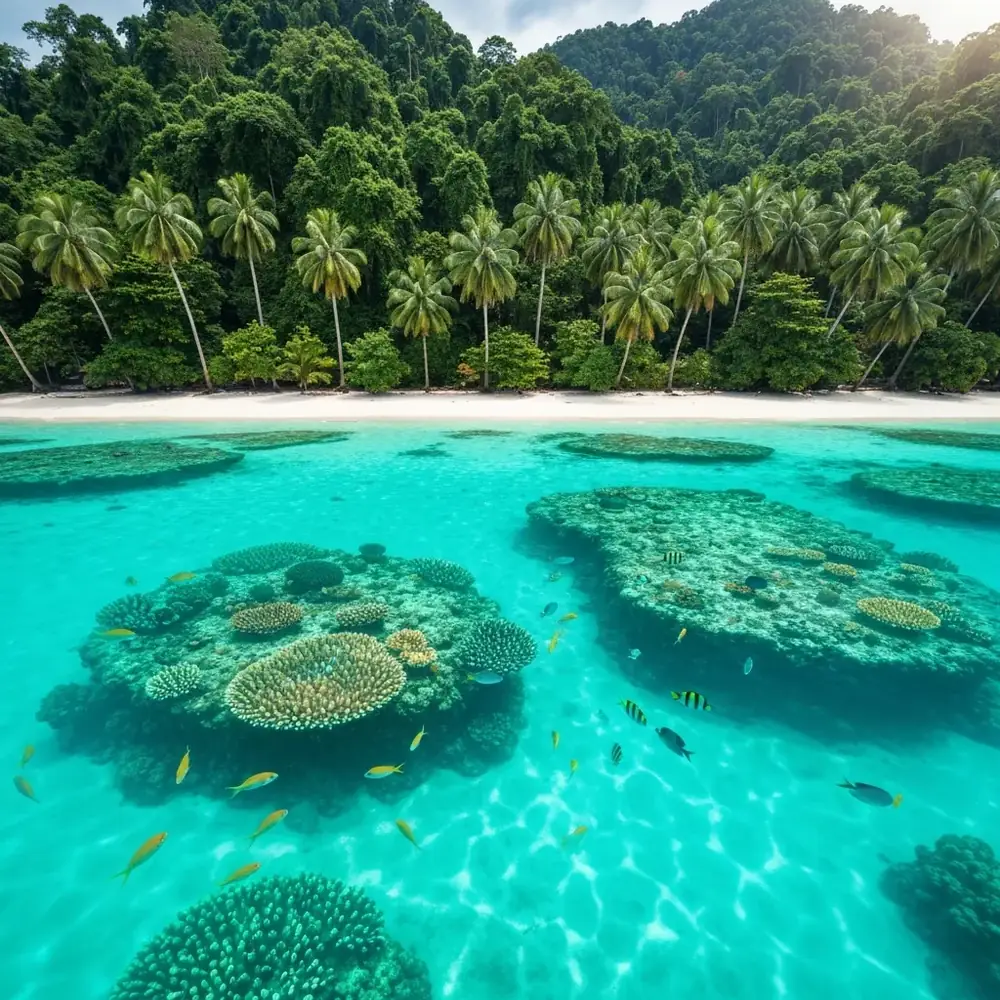
Diving and Snorkelling in Perhentian and Tioman: The Complete Guide
The complete guide to diving and snorkelling in Perhentian and Tioman: which island to choose, best season, must-dive sites, real 2026 prices, where to stay and how to get there from Kuala Lumpur.
Penang in 2026: Night Markets, Street Food and Beaches — The Complete Guide
Hawker centres, night markets, UNESCO-listed George Town and Batu Ferringhi beaches: the complete 2026 Penang guide — where to eat, where to stay, what to budget.