
Moving to Malaysia: The Complete Guide

Key facts
Visa, housing, first six months' budget, health, schools, banking: the order to plan your move to Malaysia, with real 2026 costs.
You have decided to move to Malaysia. The hard part starts now: where to begin, which step comes first, and how much the first six months actually cost. It is the question we hear most from French speakers planning the move, and until now no page on this site answered it from start to finish.
This guide is the entry point. It does not replace our detailed files on visas, housing or schools. It tells you the order to tackle them in and the budget to expect for your profile. The figures below are ranges observed in 2026, in Kuala Lumpur and the main cities.
Who moves to Malaysia, and why
Malaysia attracts people for three reasons that come down to numbers rather than postcard imagery. The cost of living stays below neighbouring Singapore and most European capitals: a two-bedroom flat in central Kuala Lumpur runs about RM 2,800 to 4,500 per month, against two to three times that in Singapore. English is the working language in most companies and government offices. And the country issues several long-stay visas, including for retirees and independent workers.
You will find the full price breakdown in our cost of living guide.
Three profiles dominate among French speakers: employees hired locally or on expat contracts, retirees looking for a warm and affordable country, and freelancers who work remotely. Each follows a different administrative path.
The order of operations
Most moves that go wrong start with a sequencing mistake: signing a lease before securing the visa, or opening a bank account too early on a tourist entry.
1. The visa. This is the first gate. Without the right residence permit, no long-term lease, no bank account and no school enrolment will work properly. Compare the available programmes before choosing.
2. Housing. Once the visa is approved, you can sign a one-year lease. Most landlords ask for two months' deposit plus one month in advance.
3. The bank account. Malaysian banks require a valid residence permit and, often, proof of a local address. Expect two or three branch visits.
4. Health insurance. Mandatory for several visas, and necessary in practice regardless: foreigners pay non-resident rates with no public coverage.
5. School, if you move with family. Places are booked months ahead, especially for the August intake.
6. Driving licence and car. Handle these in the first six months, once your address is settled.
Visas: which permit for which profile
The visa choice determines everything else. These are the main routes open to French, Belgian and Swiss citizens.
| Profile | Suitable visa | Duration | Rough cost |
|---|---|---|---|
| Employee hired by a Malaysian company | Employment Pass (Cat. I, II or III) | 1 to 5 years | Covered by the employer |
| Retiree over 50 | MM2H ("Silver" tier or above) | 5 years, renewable | Fixed deposit from USD 150,000 depending on tier |
| Remote independent worker | DE Rantau (digital nomad visa) | 1 year, renewable | About RM 1,000 in fees |
| Spouse or child of a permit holder | Dependant Pass | Tied to the main permit | Varies |
| Company founder | Employment Pass via a local company or MTEP | 1 to 5 years | Depends on the structure |
| Long stay without working | Long-Term Social Visit Pass | 6 to 12 months | Depends on nationality |
The MM2H programme is the best known route for retirees, and also the one that has changed most since 2021: current tiers require bank deposits and a minimum passive income. The DE Rantau digital nomad visa covers freelancers and remote employees, with a monthly income threshold to document.
For an overview of every existing permit and its conditions, our Malaysia visa guide 2026 details each category. French citizens have a dedicated file: Malaysia visa for French citizens.
One point that regularly catches newcomers out: the digital arrival card (MDAC) must be completed before every entry, including for residents. It is free and filled in online within three days of the flight.
Where to live
Kuala Lumpur concentrates most jobs and international schools, but it is not the only sensible choice. Rent varies by a factor of three between neighbourhoods and cities.
- Kuala Lumpur, KLCC and Bukit Bintang: RM 4,000 to 7,000 for a furnished two-bedroom, close to offices and transport.
- Bangsar, Mont Kiara, Desa ParkCity: RM 3,000 to 5,500, popular with families and expats.
- Petaling Jaya and Subang Jaya: RM 1,800 to 3,000, 20-30 minutes from the centre by car.
- Penang (George Town): RM 2,000 to 3,500, with denser street life.
- Johor Bahru: RM 1,500 to 2,500, convenient if you work in Singapore.
- Ipoh, Malacca: RM 1,200 to 2,000, for retirees who prefer quiet.
Our guide to renting in Malaysia covers the standard contract, the clauses to watch and how to get your deposit back. For market rents by neighbourhood in Kuala Lumpur, see the 2026 rental market report, and for a city-by-city comparison, where to live in Malaysia.
If you are considering buying rather than renting, foreigners can purchase certain properties, with a minimum price threshold that varies by state and separate rules for land and agricultural property. Our property buying guide covers those limits.
The budget for the first six months
This is the part future expats underestimate most. The first three months cost significantly more than the steady state, because of deposits, administrative fees and possible return trips.
| Item | Indicative amount (one person) |
|---|---|
| Housing deposit (2 months + 1 month advance) | RM 9,000 to 15,000 |
| Visa fees and medical checks | RM 1,500 to 25,000 depending on the visa |
| Annual health insurance | RM 2,000 to 6,000 |
| Furnishing and equipping the home | RM 3,000 to 8,000 |
| Flights and initial transport | RM 2,000 to 4,000 |
| Monthly living costs (one person) | RM 3,500 to 6,000 |
A couple with two children in international private schools must add RM 25,000 to 60,000 in annual tuition depending on the institution, which changes the calculation entirely. Our guide to international schools in Malaysia details registration fees, tuition and waiting lists.
For the first few months, arriving with the equivalent of six months of living costs in reserve remains the safest margin.
Working and filing taxes
Employees hired by a Malaysian company do not have to worry about building the visa file: the employer handles it, and the authorities often tie the residence permit to a minimum monthly salary that varies with the work pass tier.
Local employment law sets annual leave, sick days and notice periods on termination. Our guide to Malaysian labour law covers those minimums, which often differ from European practice on probation periods and severance.
On taxes, the rule depends on how long you are a tax resident. Below 182 days in the year, you are treated as a non-resident and your Malaysian-source income is taxed at a flat rate with no reliefs. Above that, the progressive resident scale applies. Our guide to Malaysia taxes for expats covers the rates, exemptions and the filing process with the IRB.
To benchmark your future salary, our article on the average salary in Malaysia gives ranges by sector and experience level.
Health and insurance
The Malaysian public system is good and inexpensive, but in practice subsidised care is reserved for citizens. Foreigners can use it, at higher rates, and without the cover of a national scheme.
In practice, almost every expat takes out private insurance, often required by the visa. Budget RM 2,000 to 6,000 per year for hospitalisation cover, more if you add outpatient care, maternity or regional extension to Singapore and Thailand.
Our guides to the Malaysian healthcare system and to health insurance for expats cover private hospital networks, reimbursement timelines and the exclusions common to local policies. Our health section lists recommended hospitals by city.
Driving and getting around
Malaysia drives on the left. A foreign licence alone is valid for 90 days after arrival; with an international driving permit, validity extends to one year. Beyond that, a resident must obtain a Malaysian licence, and the conversion process has been restricted: you now have to go through the local route, with a theory test and a practical test.
Our guide to driving on a foreign licence covers these rules. If you plan to buy a vehicle rather than rent, our car buying guide covers import duties, mandatory insurance and the pitfalls of the used market.
In the city you can largely do without a car: Kuala Lumpur's metro and bus network, complemented by Grab (the local equivalent of Uber), covers the central neighbourhoods well. For intercity trips and airport runs, our transport in Malaysia page lists the options and fares.
Opening an account and managing money
The bank account is often the most frustrating task of the first weeks. Malaysian banks ask for a valid residence permit, a justified local address and, for some, a minimum deposit at opening.
Our guide to opening a bank account in Malaysia lists the documents required by the main banks and the real timelines. Note that a local bank account is practically essential for paying rent, electricity bills and monthly subscriptions, which rarely go through by card.
Setting up a business, if you are self-employed
DE Rantau holders can work remotely for foreign clients, but not operate on the Malaysian market. If your plan is to invoice local clients, you need to incorporate a company and obtain a suitable work pass.
Our guide to opening a business in Malaysia covers the legal forms (Sdn Bhd, sole proprietorship), minimum capital and compliance obligations.
The first months on the ground
Three practical points cost newcomers time. Temporary housing: book a month of furnished accommodation before signing the final lease, so you can visit neighbourhoods. The local SIM card: essential for administrative steps, available in shops with a passport for about RM 20. And air conditioning: it is often the largest electricity bill item in the home, with monthly charges that surprise Europeans.
Learning a few words of Malay makes daily interactions much easier, even though English is enough for official matters. Our guide to useful Malay phrases gives a short practical list.
Related paperwork
📋 Related guides and procedures
- Malaysia visa guide
- MM2H programme
- DE Rantau digital nomad visa
- Renting a home in Malaysia
- Opening a bank account
- Health and life insurance
- Driving licence conversion
- Transport in Malaysia
FAQ
What is the easiest visa for moving to Malaysia?
It depends on your situation. For a retiree over 50, MM2H is the dedicated route, but it requires a substantial bank deposit. For a remote freelancer, DE Rantau costs about RM 1,000 and is applied for online. For an employee, the employer handles the Employment Pass. There is no unconditional "settle anywhere" visa without a sponsor or a financial requirement.
How much should I budget for the first months?
For a single person, aim to hold the equivalent of six months of living costs in reserve, around RM 25,000 to 40,000, including deposits and visa fees. With children in private schools, the initial budget nearly doubles.
Do I need to speak Malay to settle in?
No. English is enough for government offices, banks and professional life. Malay remains useful day to day, particularly in markets and small shops.
Can I work remotely from Malaysia on a tourist visa?
No. A tourist visa allows no professional activity, including remote work for a foreign employer. That is precisely what DE Rantau covers.
Are public schools open to foreign children?
Formally yes, but teaching is in Malay and places prioritise nationals. The vast majority of expat families choose international schools, with annual fees of RM 25,000 to 60,000 per child.
How long does a full relocation take?
Two to four months between obtaining the visa and being settled, assuming housing and schooling are handled in parallel. Long-stay visas such as MM2H can take three to six months of processing on their own.
👉 Need help with your move to Malaysia? Contact us for tailored support, or prepare your arrival with our transport and transfer services.
Ready to explore Malaysia?
Book your transfer, plan your trips and find the right contacts.
You may also like
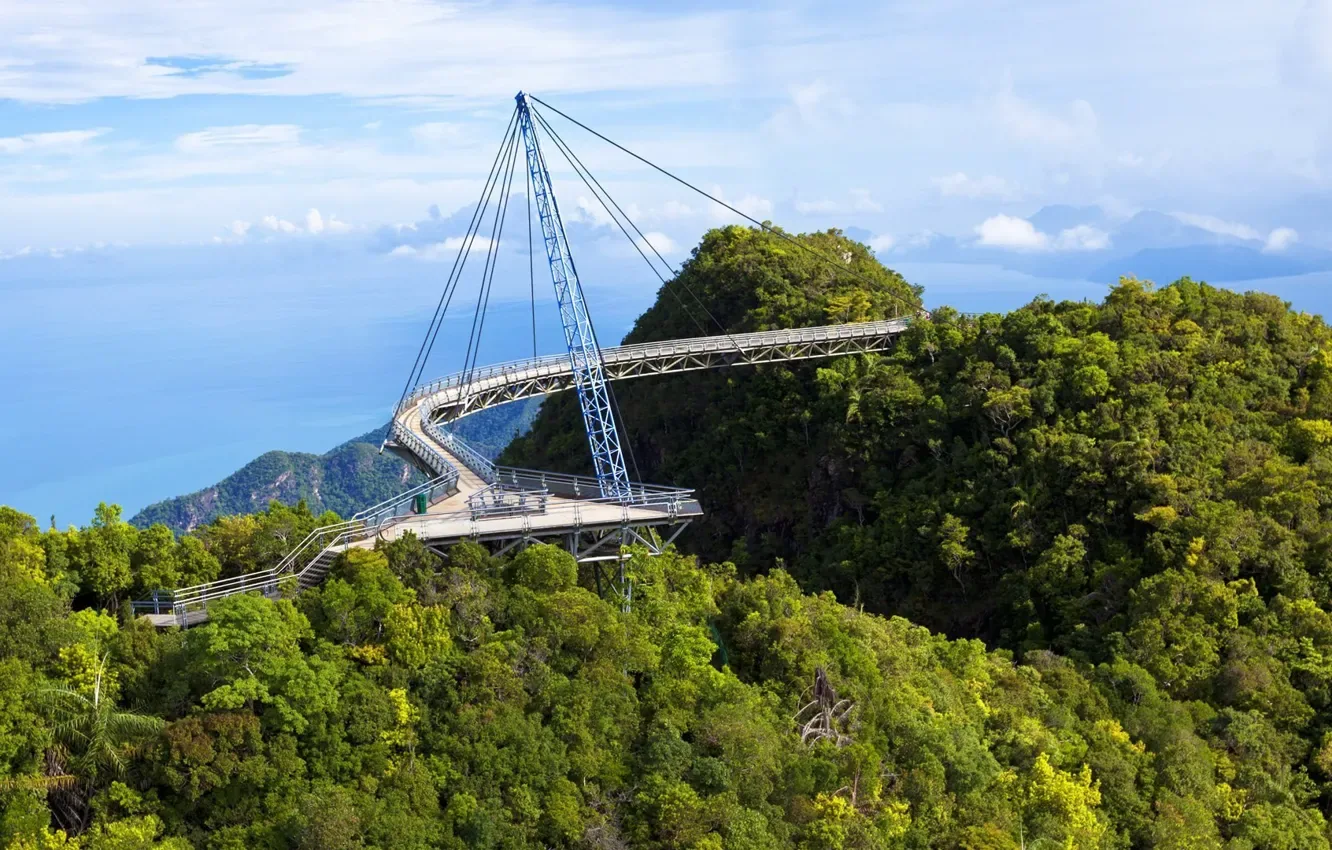
Langkawi: Beaches, Islands and Budget
A complete guide to Langkawi: the best beaches (Cenang, Tengah, Tanjung Rhu), island hopping and the Kilim mangroves, the SkyCab cable car, real daily budget, weather and practical logistics to plan your trip.

Working in Malaysia as a Foreigner: Work Permits, Salaries and Hiring Sectors (2026)
Complete 2026 guide to working in Malaysia as a foreigner: Employment Pass categories, salary thresholds, sectors hiring foreigners, employer steps and real-world salaries.
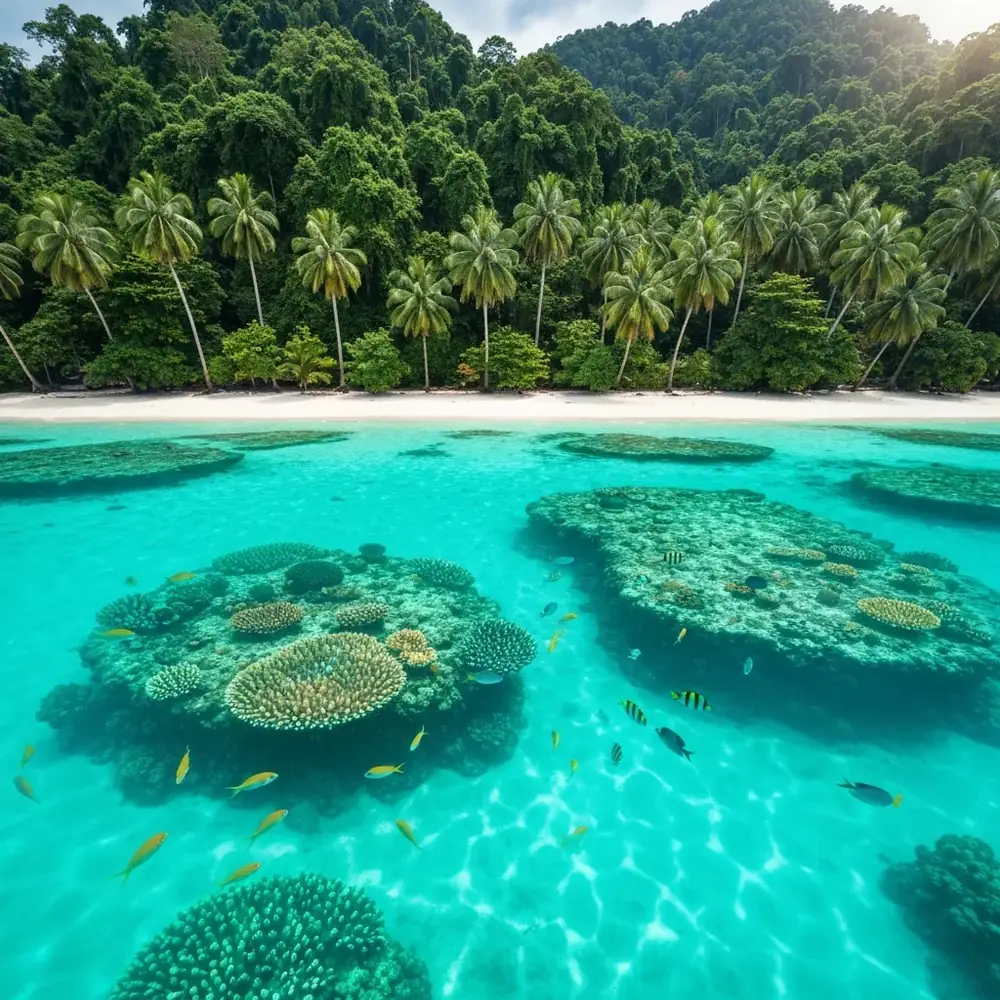
Diving and Snorkelling in Perhentian and Tioman: The Complete Guide
The complete guide to diving and snorkelling in Perhentian and Tioman: which island to choose, best season, must-dive sites, real 2026 prices, where to stay and how to get there from Kuala Lumpur.