Saying Hello in Malay: Essential Words and Phrases for Tourists and Expats
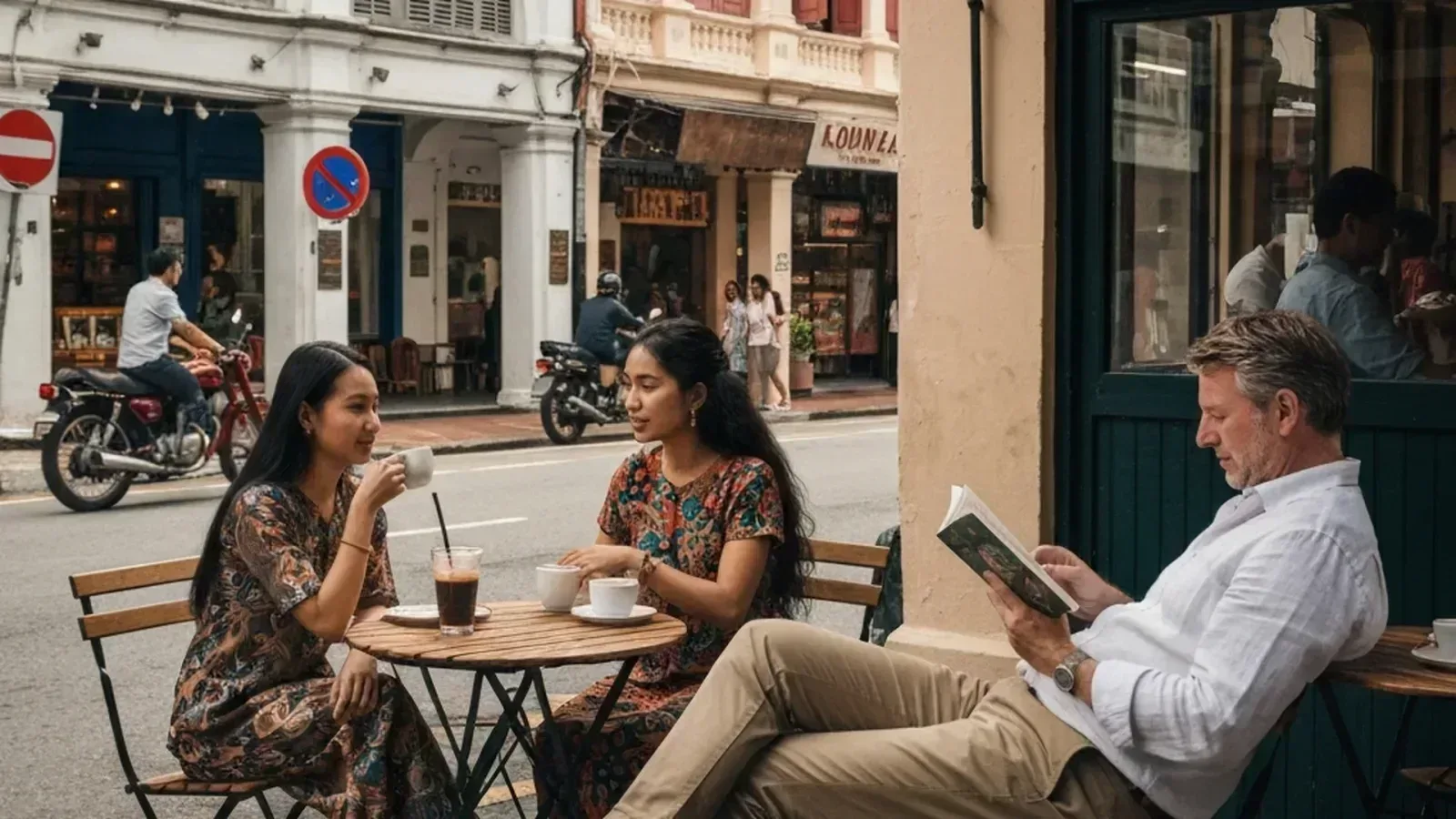
How to say hello in Malay and be understood in Malaysia: greetings, politeness, restaurants, taxis, healthcare, housing and paperwork. The vocabulary both tourists and expats actually need, with pronunciation and the traps to avoid.
Saying hello properly is the single easiest way to change your day in Malaysia. The country has three main linguistic communities — Malay, Chinese and Indian — and English is widely spoken in the cities, but it is Malay (bahasa Melayu, or bahasa Malaysia) that opens doors: a simple "selamat pagi" to a market vendor, a driver or a neighbour often turns a purely commercial exchange into a human one.
The good news is that Malay is one of the easiest languages to start. No conjugation, no gender, no tones, a Latin alphabet and very regular pronunciation. Two weeks of serious practice is enough for survival conversation, and a few dozen words already let you be understood almost anywhere.
This guide gathers greetings, polite formulas and everyday vocabulary, with pronunciation and real usage. It is written for tourists on holiday and for expats who are settling in and will need the vocabulary of housing, healthcare and paperwork.
How to say "hello" in Malay
There is no single "hello" — there are several, depending on the time of day. This is the first thing to understand: using the wrong one is a small slip, but using the right one gets you noticed immediately.
- Selamat pagi (se-LA-mat PA-ghee) — good morning, until roughly 11 am to noon.
- Selamat tengah hari (se-LA-mat tung-ah HA-ree) — good day, early afternoon (about 11 am to 3 pm).
- Selamat petang (se-LA-mat pe-TANG) — good afternoon/evening, late afternoon (3 pm to 7 pm).
- Selamat malam (se-LA-mat MA-lam) — good evening / good night, after 7 pm.
- Selamat datang — welcome (you will see it everywhere: airports, hotels, shops).
One word runs through all of these: selamat, meaning happy, safe or well. It is also the word used to wish someone good luck or a safe journey.
Pronouncing Malay: the simple rules to remember
Malay pronunciation is highly regular. Six rules cover most of it:
- Every vowel is pronounced: "a" as in father, "e" as in bet, "i" as in see.
- "C" is pronounced ch: cucu sounds like "choo-choo".
- "Sy" = sh, "ng" as in sing, "ny" as in canyon.
- Every syllable is spoken: hospital becomes "hos-pi-tal", teksi "tek-see".
- Stress almost always falls on the second-to-last syllable.
- No tones, no impossible sounds: if you read it as you see it, you will be understood.
Do not aim for perfection. A Malaysian who hears a foreigner try three words of Malay will usually smile and answer — often switching to English to help you — but the attempt is always appreciated.
The essential polite formulas
These five expressions cover 80% of situations and take one evening to learn.
- Terima kasih (te-ree-ma KA-see) — thank you.
- Sama-sama — you're welcome.
- Maaf (ma-af) — sorry, excuse me (to apologise or to get attention).
- Tolong (toh-long) — please / help me (it is also the word for "help").
- Sila — please do, go ahead, come in (an invitation).
Titles complete the picture: Encik (Mr), Puan (Mrs), Cik (Miss). In the street, older people are often addressed as pak cik (uncle) and mak cik (auntie) — this is affectionate, never disrespectful, and it works with a shopkeeper you have never met.
Introducing yourself and holding a basic conversation
Introductions follow a fixed pattern:
- Nama saya… — my name is… ("nama saya Arnaud").
- Siapa nama anda? — what is your name?
- Apa khabar? — how are you? The customary answer: Khabar baik (I am fine).
- Selamat berkenalan — pleased to meet you.
- Saya orang Perancis — I am French. Saya tinggal di Malaysia — I live in Malaysia.
- Saya belajar bahasa Melayu — I am learning Malay (the sentence that wins the most goodwill).
Two reflexes worth having: Bolehkah anda bercakap bahasa Inggeris? (do you speak English?) and Saya tidak faham (I don't understand), followed by boleh ulang? (can you repeat?). Say perlahan (slowly) if someone speaks too fast.
A note on register: anda is the neutral "you", while awak and kamu are more familiar. Use those only with people your age or younger, and never with a superior or a civil servant.
At the restaurant and the market: ordering without mistakes
This is where Malay pays off most, because the best places — hawker centres and kopitiam — rarely run in English.
- Saya mahu… / Saya nak… — I would like… (the second form is more colloquial, perfect in speech).
- Berapa harga ini? — how much is this? Terlalu mahal — too expensive. Boleh kurang? — can you lower it?
- Minta bil — the bill, please.
- Bungkus — takeaway (the word you will hear everywhere for food to go).
- Tak pedas — not spicy; pedas — spicy; kurang manis — less sweet.
- Air (ah-yer) — water; air kosong — plain water (no sugar); air batu — ice.
- Nasi — rice; ayam — chicken; daging lembu — beef; ikan — fish; sayur — vegetables; mee — noodles.
A few local staples: teh tarik (pulled milk tea), kopi (coffee), nasi lemak (the national breakfast), roti canai (Indian flatbread). And to invite someone to eat: Jemput makan — please, help yourself.
Getting around: taxi, Grab, bus and private driver
- Teksi — taxi; bas — bus; stesen — station; lapangan terbang — airport; perhentian bas — bus stop.
- Tolong pergi ke… — please take me to…
- Berhenti di sini — stop here. Kiri — left; kanan — right; terus — straight on.
- Berapa lama? — how long? Berapa ringgit? — how many ringgit?
- Saya nak beli tiket ke… — I would like to buy a ticket to…
Ride-hailing apps such as Grab removed the need to negotiate, but the vocabulary still helps: a driver asking di mana? (where?) wants a landmark, and sekarang (now) versus nanti (later) sets up an appointment. For an intercity run or a late-night arrival, a private transfer with driver removes both the language barrier and the hunt for the right terminal.
Housing and everyday life when you settle in
This is the vocabulary that separates visiting Malaysia from living there, and the one every newcomer asks for.
- Rumah — house; bilik — room; sewa — rent, rental; sewa bulanan — monthly rent.
- Tuan rumah — landlord; deposit — deposit; perjanjian — agreement; tandas — toilet.
- Air — water (note: the same spelling as English "air", pronounced "ah-yer"); elektrik — electricity; bil elektrik — electricity bill.
- Bank — bank; akaun — account; duit / wang — money; kad — card; tarik duit — withdraw money.
- Pasar — market; pasar raya — supermarket; murah — cheap; mahal — expensive.
- Kerja — work; pejabat — office; mesyuarat — meeting; bos — boss.
- Sekolah — school; anak — child; cikgu / guru — teacher; jiran — neighbour.
Two phrases to learn on arrival: Saya sedang cari rumah untuk sewa (I am looking for a house to rent) and boleh saya lihat bilik itu? (may I see that room?). For a move-in inspection, photograph everything and have the agent confirm sudah rosak (already damaged) — that word will save you an argument at checkout.
For paperwork, immigration and banking vocabulary is mostly English in the cities, but a few words help at the counter: pasport (passport), visa, imigresen, temu janji (appointment), borang (form). To prepare your file, our guide to the Malaysia visa for French citizens lists the required documents, and the one on opening a bank account in Malaysia walks through the steps.
Health, emergencies and administration
These words must be learned before you need them. Memorise them: in an emergency nobody looks up a dictionary.
- Tolong! — help! The most important word on this list.
- Klinik — clinic; hospital — hospital; doktor — doctor; farmasi — pharmacy.
- Sakit — it hurts (sakit kepala — headache, sakit perut — stomach ache).
- Demam — fever; batuk — cough; selsema — cold; luka — wound.
- Saya ada alahan — I have an allergy; ubat — medicine; resipi — prescription.
- Polis — police; kecemasan — emergency; Panggil ambulans! — call an ambulance.
The emergency number in Malaysia is 999 (police, ambulance, fire). In private hospitals in Kuala Lumpur, Penang or Johor Bahru, English is standard; in neighbourhood clinics and district public hospitals, a few words of Malay genuinely change the care you receive. The system is covered in our guide to the Malaysian healthcare system for expats.
Language mistakes to avoid and the vocabulary that makes a difference
A few traps catch every beginner.
- Using "selamat pagi" at 3 pm: switch to selamat petang, it sounds far more natural.
- Confusing "air" (water) with English "air": in context it is obvious, but in Malay "air" means water.
- Saying no bluntly: in Malaysia a refusal usually comes as belum (not yet) or boleh (maybe). A flat "tidak" can sound harsh.
- Ignoring gestures: use your right hand to give and receive, and never point with a finger.
- Speaking loudly: a calm tone and a smile achieve more than vocabulary.
Three particles bring your Malay to life, even when it is imperfect: lah (for emphasis, "tak ada lah"), kan (asking for confirmation) and kan boleh (isn't it possible?). You will hear them everywhere; dropping them in at random will make people smile, and omitting them harms nothing.
Finally, remember that street Malay (bahasa pasar) is simpler than the formal Malay taught at school. Nobody will hold a grammar mistake against you — the effort is what counts. And if you work in Malaysia, the professional context remains overwhelmingly English-speaking: our article on the Malaysian employment code sets out the practices, and the one on the average salary in Malaysia puts pay levels in perspective.
FAQ: Malay for everyday life
How do you say hello in Malay?
"Selamat pagi" in the morning (until around noon), "selamat tengah hari" in the early afternoon, "selamat petang" in the late afternoon and "selamat malam" in the evening. The shared word is "selamat", meaning happy or safe and well.
Is Malay difficult to learn for an English speaker?
No — it is one of the most accessible languages: Latin alphabet, regular pronunciation, no conjugation and no gender. The obstacle is vocabulary, not grammar. A few dozen words are enough for daily exchanges.
Is English enough to live in Malaysia?
In the cities, yes: hotels, private hospitals, banks and businesses operate in English. But a large part of daily life — markets, hawker centres, taxis, neighbours, neighbourhood clinics — happens in Malay, and a few words change the welcome you receive.
What is the difference between bahasa Melayu and bahasa Malaysia?
None in practice: "bahasa Melayu" refers to the Malay language, while "bahasa Malaysia" is the official name adopted in 1986 to stress its status as the national language shared by all communities.
How do you order food in Malay?
Say "saya nak…" (I would like), add "tak pedas" if you don't want it spicy and "kurang manis" for less sugar. For takeaway, one word: "bungkus". Ask for the bill with "minta bil".
What should I say in an emergency?
"Tolong!" means help and "Panggil ambulans!" means call an ambulance. The emergency number is 999. Useful words: "sakit" (pain), "demam" (fever), "klinik" and "hospital".
Should I learn Malay if I move to Malaysia?
It is not compulsory, but it is a considerable social accelerator. Expats who manage a few phrases get better outcomes with landlords, tradespeople, medical staff and neighbours — and Malay lessons are inexpensive locally.
📋 Useful resources
- Malaysia visa for French citizens — process and documents
- Renting a home in Malaysia — lease, deposit, viewings
- Opening a bank account in Malaysia — everyday banking
- Malaysian healthcare for expats — hospitals and insurance
- Average salary in Malaysia 2026 — pay levels
- Getting around Malaysia — bus, train, flights, transfers
- Kuala Lumpur destinations — where to stay and what to see
- Contact us — questions, quotes and private transfers
Ready to explore Malaysia?
Book your transfer, plan your trips and find the right contacts.
You may also like
Cameron Highlands: What to Do, 2-Day Itinerary and Budget (2026)
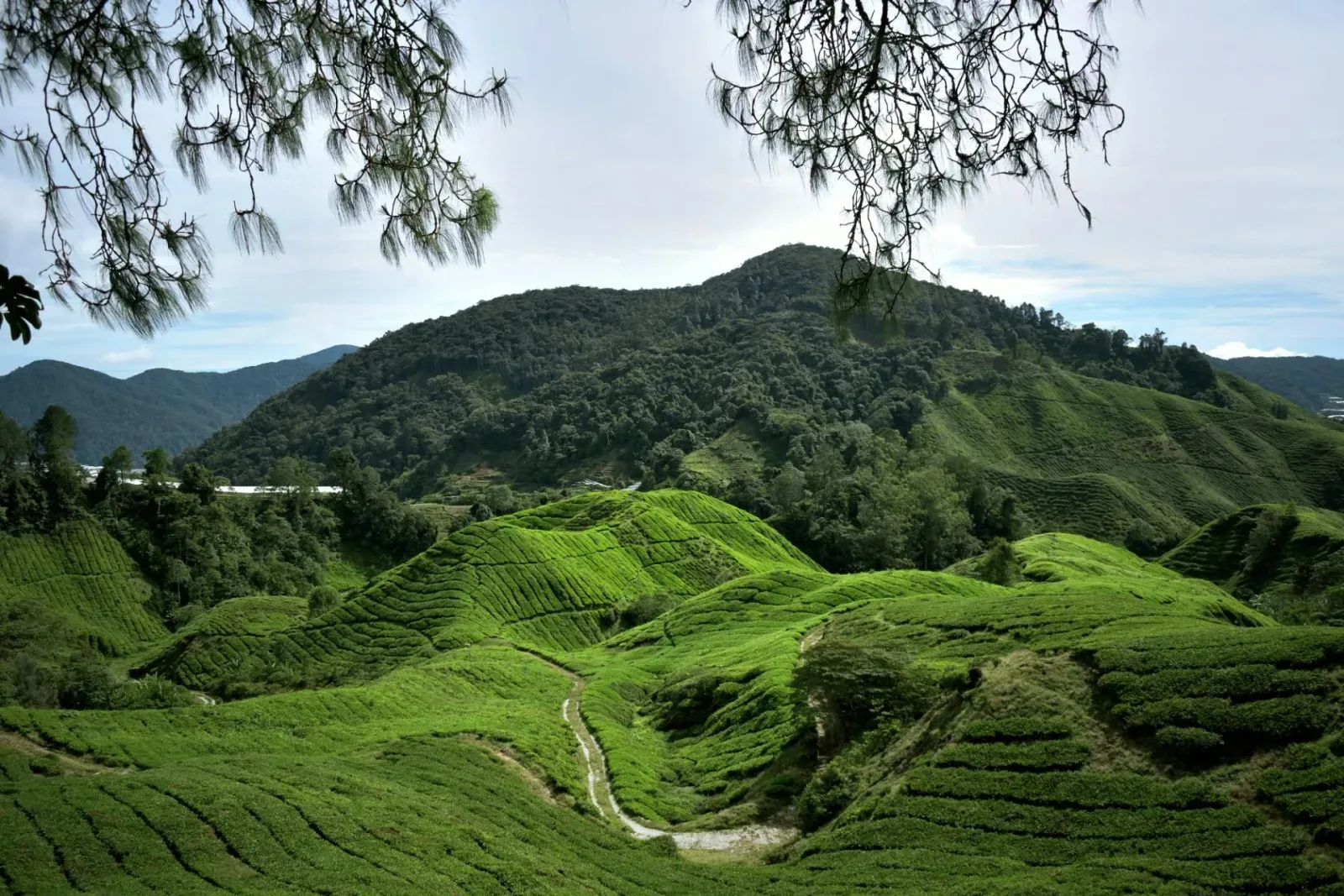
A complete Cameron Highlands itinerary for 2026: BOH tea plantation, Mossy Forest, strawberry farms and the Brinchang night market. How to get there from Kuala Lumpur, where to stay, real budget and the mistakes to avoid.
MM2H 2026: Requirements, Tiers and Costs of Malaysia's Long-Stay Visa
MM2H 2026 explained: the four categories (Silver, Gold, Platinum, SEZ/SFZ), fixed deposits, compulsory property purchase, minimum stay, real fees, tax treatment, health insurance and the full application process.

What to Do in Kuala Lumpur in 3 Days: The Complete Itinerary (2026)
A day-by-day 3-day Kuala Lumpur itinerary for 2026: Chinatown, Merdeka Square, the Petronas Towers, Batu Caves, KL Tower and Bukit Bintang. Where to stay, real budget, transport and a practical FAQ.