
MM2H 2026: Requirements, Tiers and Costs of Malaysia's Long-Stay Visa
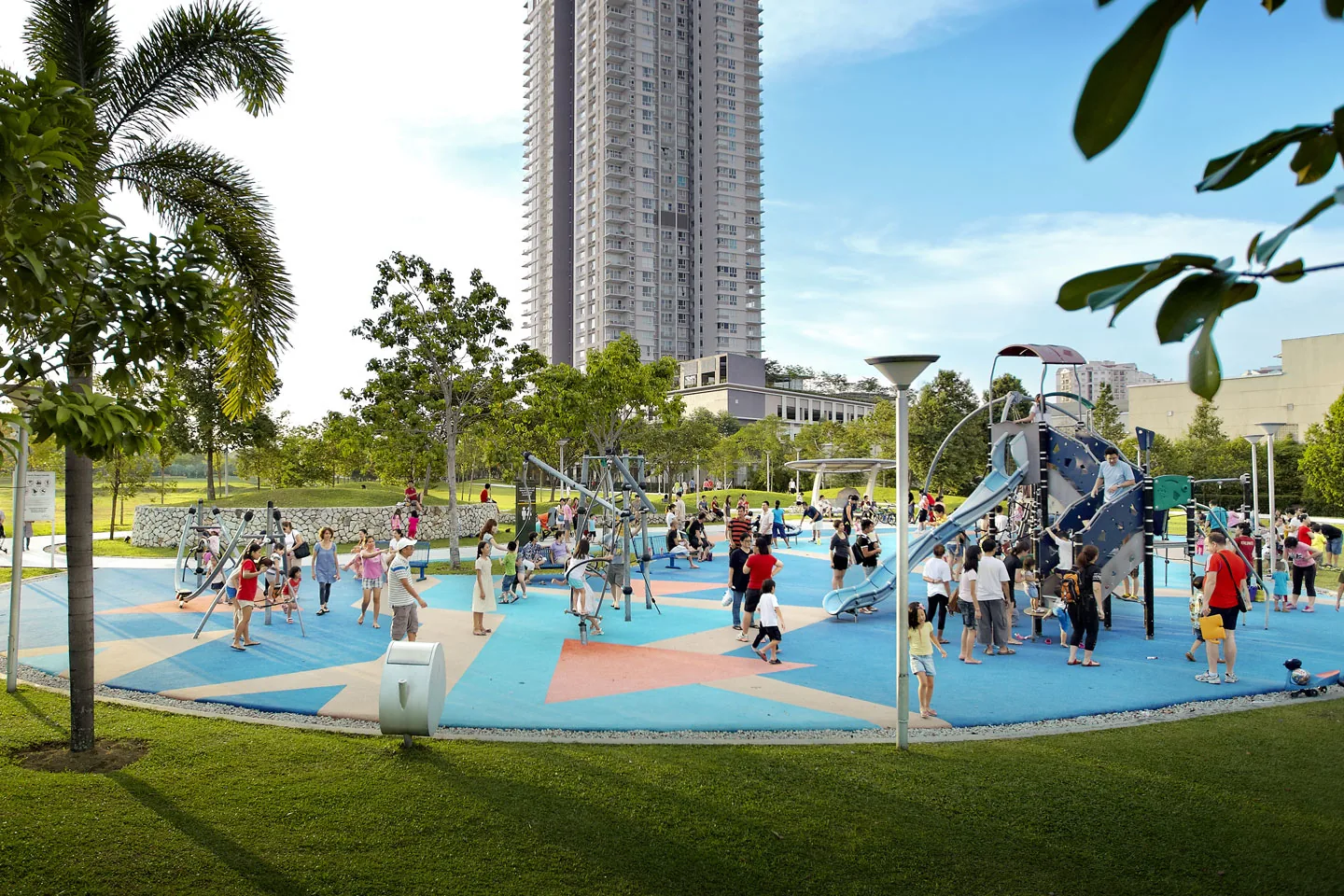
MM2H 2026 explained: the four categories (Silver, Gold, Platinum, SEZ/SFZ), fixed deposits, compulsory property purchase, minimum stay, real fees, tax treatment, health insurance and the full application process.
Malaysia's MM2H (Malaysia My Second Home) programme remains the country's best-known long-stay visa: a multiple-entry social visit pass, valid for at least five years, that lets you live in Malaysia without giving up your home country residence. Since the 2024 overhaul it is no longer a single programme but four distinct categories — Silver, Gold, Platinum, plus a brand-new SEZ/SFZ category built around Johor's special economic and financial zones.
The problem is that most online guides still mix the pre-2021 rules, or the 2021–2023 version, with the rules that actually apply today. Applicants then turn up with an incomplete file, a miscalibrated budget, or the belief that parking a fixed deposit is all it takes to secure a ten-year visa.
This guide resets the picture with the criteria in force in 2026: fixed deposit amounts per category, pass validity, the compulsory property purchase, minimum stay rules, real fees, tax treatment, health insurance, eligible dependants and the full application sequence. The figures below come from the guidelines published by the MM2H Centre at the Ministry of Tourism, Arts and Culture (MOTAC). For the step-by-step breakdown of each procedure, keep our full MM2H guide open in a second tab.
What actually changed in the current MM2H programme
The current version of the programme runs on four categories:
- Platinum — USD 1,000,000 fixed deposit, 20-year pass.
- Gold — USD 500,000 deposit, 15-year pass.
- Silver — USD 150,000 deposit, 5-year pass.
- SEZ/SFZ — USD 65,000 deposit (applicants aged 21–49) or USD 32,000 (aged 50+), 10-year pass, conditional on buying a residence in Forest City, Johor.
Three changes deserve your attention before you start calculating anything:
- The minimum age has come down. It is 25 for Silver, Gold and Platinum, and just 21 for the SEZ/SFZ category. Thirty-something remote workers are no longer excluded by default.
- The SEZ/SFZ category is new. It targets investors who base themselves in a special economic or special financial zone — in practice, Forest City and the Johor–Singapore corridor. It is the cheapest entry point into the programme, but the property purchase is geographically locked.
- Buying a residence is compulsory in every category. This is the heaviest condition of the current MM2H, and the one that sinks the most badly prepared applications: thresholds run from RM600,000 (Silver) to RM2,000,000 (Platinum), and resale is barred for ten years unless you upgrade to a more expensive property.
On the other hand, one constraint has disappeared: participants aged 50 and over no longer have any minimum stay requirement in Malaysia. That is a major shift for retirees who want to split their year between Europe and Asia.
The four categories, numbers included
| Criterion | Platinum | Gold | Silver | SEZ/SFZ (50+) | SEZ/SFZ (21–49) |
|---|---|---|---|---|---|
| Fixed deposit | USD 1,000,000 | USD 500,000 | USD 150,000 | USD 32,000 | USD 65,000 |
| Pass validity | 20 years, renewable | 15 years, renewable | 5 years, renewable | 10 years, renewable | 10 years, renewable |
| Minimum age | 25 | 25 | 25 | 50 | 21 |
| Property purchase | Compulsory, RM2,000,000+ | Compulsory, RM1,000,000+ | Compulsory, RM600,000+ | Compulsory in Forest City, Johor | Compulsory in Forest City, Johor |
| Participating fee (one-off) | RM200,000 | RM3,000 | RM1,000 | RM1,000 | RM1,000 |
| Processing fee | RM5,000 (principal) + RM2,500 per dependant | same | same | same | same |
| Minimum stay | 90 days/year (ages 25–49), none at 50+ | same | same | None | 90 days/year |
| Renewal fee | RM5,000 | RM3,000 | RM1,500 | RM300 | RM300 |
Two practical remarks. First, Platinum's participating fee (RM200,000) is larger than the fixed deposit required by the lower tiers — this bracket is clearly aimed at a very high-end clientele. Second, the processing fee (RM5,000 plus RM2,500 per dependant) is identical across categories: it is not a factor in choosing a tier, but it does weigh on a family budget.
The fixed deposit: your main financial commitment
The fixed deposit is the heart of MM2H. It must be placed with a Malaysian licensed financial institution under the Financial Services Act 2013 or the Islamic Financial Services Act 2013 — in other words, not with a foreign bank, even one you have banked with for twenty years.
Three rules to remember:
- A maximum of 50% of the principal may be withdrawn, once you have obtained participant status. The approved purposes are strictly defined: buying a residence, education costs, medical costs and tourism activities in Malaysia.
- The deposit is tax-exempt under the programme: interest earned on the fixed deposit is not taxed in Malaysia.
- The deposit is not money lost. It is a guarantee, not a fee: at the end of the programme, or if your application is refused after approval-in-principle, the funds are released subject to the bank's terms.
In practice the sequence runs like this: you file your application, you receive approval-in-principle, then you open a Malaysian bank account and place the deposit within the deadline. Opening that account is worth preparing in advance — our dedicated procedure on opening a bank account in Malaysia and our visa hub will save you pointless trips to the branch.
Buying property: the most onerous condition
You cannot obtain or keep MM2H without buying a residential property in Malaysia. The threshold depends on the category:
- Silver: RM600,000 minimum.
- Gold: RM1,000,000 minimum.
- Platinum: RM2,000,000 minimum.
- SEZ/SFZ: compulsory purchase in Forest City, Johor, at the price set by the development programme.
Two classic traps. First, resale is barred for ten years, except when buying a higher-value property — so plan on this home being your residence or your rental investment for a decade. Second, MM2H thresholds stack on top of the state-level rules that apply to foreign buyers: minimum prices vary from state to state, and Kuala Lumpur, Selangor and Penang enforce their own floors. Check both grids before signing anything; our accommodation in Malaysia page covers neighbourhoods, leases and local practice. To size up the overall cost of a relocation, start with our cost of living analysis.
Note that failing to comply with the property purchase obligation, like any breach of the conditions, results in revocation of the MM2H pass. This is not a theoretical clause.
Minimum stay, renewal and transfer of the pass
The minimum stay is 90 cumulative days per year for participants aged 25 to 49. The flexibility is real: those 90 days can be fulfilled by the principal and/or their spouse and dependants, so a couple can split the stays between them. Participants aged 50 and over have no stay obligation at all, and can keep their European life while visiting Malaysia at their own pace.
On renewals, two scenarios:
- Before the maximum programme term ends, the pass is renewed every five years (or according to your passport validity). Fees include a visa fee of RM0–50 depending on nationality and a fixed pass fee of RM500 per year.
- After the maximum term, the pass is renewable in five-year blocks, against a valid passport, a recent medical report and up-to-date health insurance. Fees range from RM300 (SEZ/SFZ) to RM5,000 (Platinum).
If the principal dies, the MM2H pass is transferable to a next-of-kin among the registered dependants. That is reassuring for retired couples.
Dependants: who can you bring?
MM2H allows a broad family perimeter:
- your spouse;
- biological, step- or adopted children under 21; between 21 and 34, they must be unemployed and single while in Malaysia;
- medically certified children with disabilities, with no age limit;
- parents and parents-in-law;
- a foreign maid, Platinum category only.
Dependant children may study up to tertiary level at state-recognised institutions — either under the MM2H pass itself or with an automatically issued Student Pass. A medical examination is compulsory for the principal and each dependant, at a clinic or hospital on the ministry's panel.
Working under MM2H: what is forbidden, and the real alternatives
Let us be blunt: the MM2H pass is not a work permit. Active business and investment activities, and career opportunities, are not permitted under the standard categories. If your plan involves running a company, billing clients from Malaysia or taking a salaried job, you need a different legal vehicle:
- Employment Pass (EP) for a salaried role with a Malaysian employer;
- Entrepreneur Pass (MTEP) to set up and run your own company;
- DE Rantau Nomad Pass for remote work for a foreign employer or foreign clients;
- Student Pass for a course or degree.
Many applicants discover this limit too late, after paying application fees. Map out your income sources before picking a category — our complete Malaysian visa hub compares every available pass.
Health and insurance: what MM2H really requires
The programme requires a compulsory medical check-up after approval, at a clinic or hospital on the MOTAC panel. Long-term medical treatment is permitted throughout the pass — a strong argument given the standard of private hospitals in Kuala Lumpur, Penang and Johor Bahru, and the cost of care compared with Europe or the United States.
At renewal, valid health insurance is required in the file. It is the document participants most often forget, and it determines whether your residence status continues. Our health in Malaysia page explains how the public and private systems work, and our health and life insurance procedure lists the covers worth comparing for an expatriate profile (excess, medical evacuation, pre-existing conditions).
Tax: the real upside of MM2H
MM2H provides an exemption on foreign funds and foreign income brought into Malaysia, and on fixed deposit interest. For a retiree drawing a European pension or rental income, the saving can be substantial compared with other destinations.
Be careful, though, not to confuse a programme tax benefit with Malaysian tax residence: tax residency rules, double taxation treaties and the treatment of Malaysian-sourced income follow their own criteria. Our file on taxes in Malaysia for expats sets out the framework, and our expat guide covers the full set of relocation procedures. Have a tax adviser confirm your position before moving significant sums.
What a relocation under MM2H actually costs
Beyond the fixed deposit, a realistic relocation budget includes:
- participating and processing fees (from RM1,000 + RM5,000 on Silver to RM200,000 + RM5,000 on Platinum);
- the property purchase (RM600,000 minimum, excluding notary fees, transfer duties and agent commissions);
- health insurance for the whole family;
- rental deposit or shipping costs while you search for the property;
- MM2H agency fees, which are unavoidable since every application must be filed through a MOTAC-licensed tour operator.
Dollar or euro amounts depend on the exchange rate of the day, which moves noticeably from quarter to quarter: recalculate at the moment you file. Another frequently overlooked item is day-to-day spending. Kuala Lumpur remains very affordable on a European income, but rents in expat neighbourhoods (Mont Kiara, Bangsar, KLCC) and international school fees add up fast. Cross-check our cost of living data with the on-the-ground realities described in our expat guide.
The application process, step by step
- Self-assessment. Check your financial eligibility against the target category, and decide whether you are bringing a spouse and children.
- Go through a licensed operator. Every application must be submitted and processed by a tour operator licensed by MOTAC under the Tourism Industry Act 1992. This is a requirement, not an option.
- Build the file. Valid passport, photographs, medical report, certificate of good conduct, proof of income or funds, bank statements.
- Submit to the MM2H One Stop Centre (OSC). The file is then routed to the relevant agencies, including Immigration.
- Verification and background checks. Typically allow three to six months between submission and approval-in-principle.
- Approval-in-principle, bank account opening, fixed deposit placement within the given deadline.
- Final approval, MOTAC panel medical check-up, then purchase of the residence under your category's conditions.
📋 Related procedures
- Detailed MM2H guide (four categories) — criteria, documents, milestones
- All Malaysian visas — EP, MTEP, DE Rantau, Student Pass, LTSVP
- Opening a bank account in Malaysia — a prerequisite for the fixed deposit
- Health and life insurance — covers to compare
- Accommodation in Malaysia — neighbourhoods, leases, local practice
- Cost of living — realistic budgets by city
- Expat taxes — tax residence and foreign income
FAQ: MM2H in 2026
How much is the fixed deposit for MM2H in 2026?
USD 150,000 on Silver, USD 500,000 on Gold and USD 1,000,000 on Platinum. The SEZ/SFZ category is far less demanding: USD 65,000 for applicants aged 21–49 and USD 32,000 for those aged 50 and above, in exchange for a property purchase in Forest City, Johor.
Can I work in Malaysia on an MM2H pass?
No. MM2H is a multiple-entry social visit pass: it permits neither salaried employment nor the active management of a company. To work you need an Employment Pass, an Entrepreneur Pass (MTEP), or — for remote work for foreign clients — a DE Rantau Nomad Pass.
Is buying a property compulsory?
Yes, in every category. The minimum purchase price is RM600,000 on Silver, RM1,000,000 on Gold and RM2,000,000 on Platinum. Resale is barred for ten years unless you upgrade to a higher-value property. Breaching this obligation leads to revocation of the pass.
How many days must I spend in Malaysia each year?
90 cumulative days per year for participants aged 25 to 49, and those days may be fulfilled by the principal and/or their spouse and dependants. Participants aged 50 and over have no minimum stay requirement.
Does MM2H lead to permanent residency?
No. The programme does not automatically lead to permanent residency or citizenship. It is a renewable long-stay pass; a PR application remains possible in exceptional cases, assessed individually by the authorities.
How long does the process take, and do I need an agency?
Typically three to six months between filing and approval-in-principle. And yes — using a MOTAC-licensed tour operator is compulsory: your application must be submitted and processed by a licensed professional.
👉 Planning a long-stay move to Malaysia and want to avoid file errors, wrong categories and wasted months? Get in touch — we help you frame your project, budget and procedures before you file anything.
Ready to explore Malaysia?
Book your transfer, plan your trips and find the right contacts.
You may also like

What to Do in Kuala Lumpur in 3 Days: The Complete Itinerary (2026)
A day-by-day 3-day Kuala Lumpur itinerary for 2026: Chinatown, Merdeka Square, the Petronas Towers, Batu Caves, KL Tower and Bukit Bintang. Where to stay, real budget, transport and a practical FAQ.
Buying a Car in Malaysia: The Complete Guide for Expats (2026)
Can a foreigner buy a car in Malaysia? 2026 new and used prices, licence, Puspakom inspection, insurance, road tax, unsubsidised fuel and financing: the complete guide to buying, registering and driving without surprises.
Opening a Bank Account in Malaysia: The Complete Guide for Expats (2026)
Passport, visa, proof of address, minimum deposit: how to open a bank account in Malaysia in 2026, which banks to choose, what it costs, and the alternatives if you do not yet hold a long-stay visa.