Safety in Malaysia: what expats actually experience (2026 guide)
Key facts
Real crime levels, safe neighbourhoods in Kuala Lumpur, theft and scams to avoid, emergency numbers, health insurance, driving and cultural reflexes: the factual safety guide for expats in Malaysia.
Safety in Malaysia: what expats actually experience (2026 guide)
Short answer: Malaysia is one of the safest countries in Southeast Asia for an expat. Violent crime figures are low, police presence is visible in urban areas, and most newcomers get through their first months without a single incident. But "safe" does not mean "risk-free": laptop theft in cafés, taxi scams, opportunistic break-ins on ground floors, and local driving habits all require a different daily discipline from the one you had in Paris, Brussels or Montreal.
This guide brings together what expats actually living in Kuala Lumpur, Penang, Johor Bahru and Kota Kinabalu describe: which neighbourhoods feel safe and at what hours, how to handle a snatch theft, when to call 999, what your health insurance really covers, and which cultural reflexes change everything about day-to-day safety. It complements our expat guide to Malaysia and our health insurance dossier.
1. The real safety level in 2026
Malaysia records a homicide rate of roughly 1 per 100,000 inhabitants, well below the global average and far from the countries often cited as "high risk". Violent street crime is rare in Kuala Lumpur. The real issue, from a police perspective, is petty crime: bag snatching, handbag theft, break-ins at unguarded residences and various scams.
The important point for an expat: crime is not evenly distributed. It concentrates in certain outlying neighbourhoods, around night-time bus stations, and in heavily touristed areas. Knowing that geography is worth more than any generic advice.
Another factor to understand: Malaysia is a multi-faith country with specific laws. Certain offences — apostasy, drug consumption, unmarried relationships for Muslims — fall under Syariah courts applicable to Muslims. For non-Muslims, civil courts apply, but drug legislation is extremely severe for everyone: drug trafficking carries the death penalty. No expat should overlook this, even in good faith over a small quantity.
Finally, distinguish personal safety from health safety. Dengue remains the main real day-to-day risk, more than assault. We come back to this below.
2. Neighbourhoods where expats feel safe
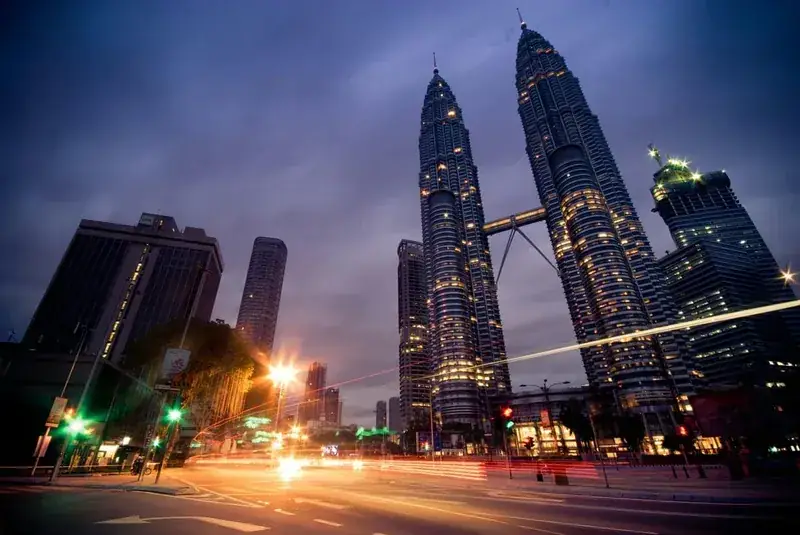
In Kuala Lumpur, the areas most used by expats — Mont Kiara, Bangsar, KLCC, Damansara Heights, Desa ParkCity, KL Sentral — are generally perceived as safe, with a strong presence of condominium guards and private security patrols. Condos there usually have controlled access, badge entry and sometimes two levels of security.
The real contrast lies elsewhere. Some commercial streets in Pudu, Chow Kit or Bukit Bintang see more theft and loitering late at night, without being no-go areas. The empirical rule among expats: perceived safety drops noticeably after 11 pm on commercial streets, and taking a taxi or ride-hailing car changes everything.
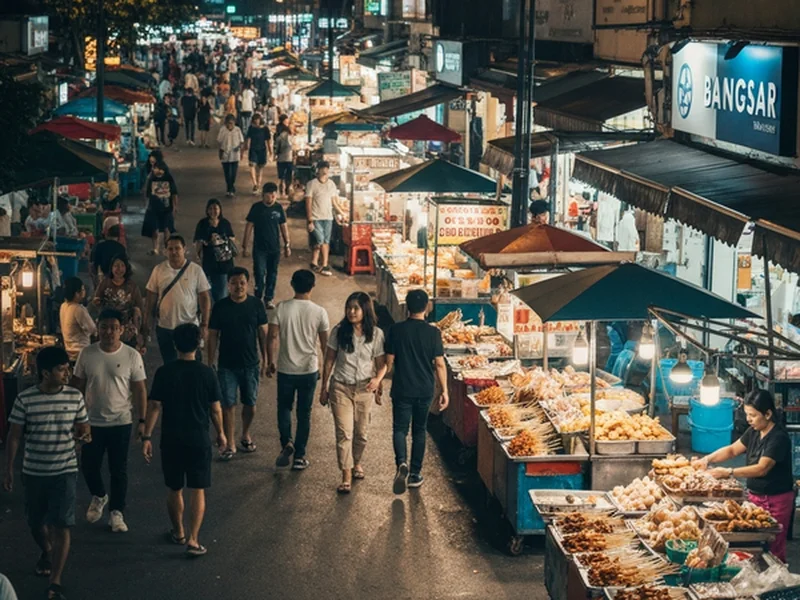
In Penang, Georgetown feels very safe during the day, with extra care needed for bags in night markets. In Johor Bahru, the proximity to Singapore creates a transit economy and more vigilance around bus stations. In Kota Kinabalu, the atmosphere is calmer, but bag theft on tourist beaches does happen.
Our article on where to live in Kuala Lumpur by neighbourhood details these areas, their rents and their profiles. Choosing your neighbourhood remains your first safety lever: a guarded condo on the outskirts is often better than an unguarded townhouse in the centre, for a comparable budget.
3. The most common offences and how to avoid them
Expats describe three recurring categories of incident.
Opportunistic theft. A phone left on a café table, a bag under a chair, a laptop visible in a parked car. Malaysia is not more violent than elsewhere, but these thefts are frequent in dense areas. Reflex: never leave a phone alone on a terrace, even two metres away.
Bag snatching from motorbikes. Pillion riders on scooters snatch a shoulder bag from pedestrians or motorcyclists. Victims are often women with a visible bag carried on the road side. Reflex: carry your bag on the pavement side, avoid walking along the edge of the road at night, and do not chase the scooter.
Residential break-ins. They often target ground floors, terraced houses with insufficient grilles, or homes left empty during holidays. Reflex: ask the guard for a patrol round while you are away, avoid publishing your holiday dates publicly, and check that your home insurance covers theft.
Taxi meter scams ("the meter is broken") still exist but have declined sharply with Grab, the dominant ride-hailing app in Malaysia. Almost all expats use it daily. It gives a known price in advance and a trip history, which also reduces the risk of incidents.
4. Numbers and procedures after an incident
In an emergency, the single number is 999 (police, ambulance, fire). Dedicated numbers exist; 999 works from a mobile and some operators route to the relevant service. For a theft or assault, you must file a police report before your insurer can act — a non-negotiable step, even for a stolen phone.
Keep your embassy or consulate contacts (France, Belgium, Switzerland, Canada), your insurer's address, and your building guard's number in your phone. If you lose your passport, the consulate issues an emergency travel document, usually within a few days.
One often-overlooked point: police reports are free, but you must go to the station covering the incident location (or your residence, depending on the case). Keep a copy — your insurer and sometimes your employer will ask for it.
5. Health insurance and health safety: the real daily risk
Statistically, an expat in Malaysia is far more likely to deal with a clinic than a police station. Dengue is endemic, with a peak during the rainy season; scooter accidents are a major cause of trauma; and access to private care is fast but paid.
The public system (Ministry of Health hospitals) varies in quality by state and is heavily subsidised for citizens, but expats in practice turn to private facilities (Gleneagles, Prince Court, Sunway, Pantai, Island Hospital in Penang), where a consultation typically costs between 100 and 250 ringgit, and hospitalisation far more. Our dossier on the Malaysian healthcare system and our expat health insurance guide detail the options and exclusion traps.
Two concrete precautions: check that your policy covers medical evacuation to Singapore or Bangkok, and check the pre-existing conditions clause. Many expats underestimate the cost of a night in private intensive care in Kuala Lumpur, which can exceed 5,000 to 10,000 ringgit depending on the condition.
6. Road safety: the other real danger
Local driving is probably the most underestimated risk for newcomers. Rules exist but are applied inconsistently: overtaking on the left, motorbikes filtering between lanes, priorities negotiated with the horn. Driving on the left takes several weeks to adapt to, especially roundabout and overtaking reflexes.
Motorbikes are everywhere and account for a large share of serious accidents. In a car, seatbelts are mandatory in all seats. Automatic enforcement cameras (AES) operate on major roads and fines arrive by post, sometimes months later.
If you drive, check your cover: local comprehensive insurance often covers the vehicle but not always the driver. And keep your international driving permit or your conversion in order, as detailed in our driving licence conversion procedure.
7. Culture, discretion and the social side of safety
Part of safety in Malaysia is cultural. Modest dress, respect for places of worship and restraint in public spaces reduce friction, and above all, avoiding any display of wealth (watch, jewellery, latest phone) remains the best anti-theft reflex.
Malaysians are generally welcoming and not confrontation-prone. If something goes wrong, verbal escalation never helps: stay calm, call the police if needed, and document.
Residency status also matters. An Employment Pass or MM2H holder has a clear administrative framework that makes procedures easier after an incident; a digital nomad on De Rantau has a more recent status that local officials sometimes understand less well. Our visa guide clarifies these statuses.
8. First-months checklist
- Save 999, your insurer and your consulate in your phone.
- Install Grab and register a valid payment method.
- Check locks and the security system of your home as soon as you move in.
- Take a photo inventory of valuables for your insurance.
- Take out health insurance with medical evacuation before you arrive, not after.
- Get home insurance covering theft.
- Get familiar with driving on the left before renting a car.
FAQ
Is Malaysia safe for a female expat?
In practice, yes, in urban areas and provided you follow local discretion rules. Female expats mainly report street harassment in some busy neighbourhoods, rarely assault. Classic advice still applies: avoid walking alone very late in deserted areas, prefer Grab to walking at night.
Do I need home insurance on top of health insurance?
Yes. Health insurance never covers property. Theft, water damage and home liability require a specific policy or an extension of your existing contract.
Can you drink tap water in Malaysia?
Expats drink filtered or bottled water in everyday practice, even though water is treated. For cooking and brushing teeth, tap water is generally considered acceptable in urban areas, but caution is wise.
What should I do if my passport is stolen?
File a police report, then contact your consulate or embassy for an emergency travel document. Keep a digital copy of your passport in a safe place to speed up the process.
Is Malaysia safer than Thailand or Indonesia?
On violent crime indicators, Malaysia is generally comparable to Thailand and slightly safer than some regions of Indonesia. Differences mainly lie in how daily risks are managed, cleanliness and access to healthcare, rather than physical safety.
Related procedures
📋 Related procedures
- Health and life insurance → /en/procedures/health-and-life-insurance/
- Driving licence conversion → /en/procedures/driving-license-conversion/
- Transportation in Malaysia → /en/procedures/transportation-in-malaysia/
👉 A question about your move, your home or your insurance? Contact us — we reply within 24 business hours.
Don't miss the next guides
One email every 15 days: new itineraries, tested addresses and Malaysia deals. Nothing else.
No spam. One-click unsubscribe, anytime.
Ready to explore Malaysia?
Book your transfer, plan your trips and find the right contacts.
This guide was written with the assistance of AI, then reviewed and corrected by a member of the team before publication.
You may also like
Safety in Malaysia in 2026: What Expats Really Need to Know
Is Malaysia dangerous? An objective look at safety in Malaysia in 2026: petty crime, scams targeting foreigners, road safety, health and natural risks, emergency numbers and region-by-region advice for expats.

Health Insurance for Foreigners in Malaysia: What Policies Actually Cover (2026)
Health insurance for foreigners in Malaysia: what the law requires, local vs international policies, real private hospital costs in KL and the seven lines to read before signing.
Health Insurance in Malaysia: The Complete Guide for Expats (2026)
Local versus international health insurance in Malaysia: what the law requires, the five lines to compare before signing, real private hospital prices and the mistakes new arrivals pay dearly for.