
Malaysian Street Food: A Culinary Journey Through Southeast Asia
Key facts
Nasi lemak, satay, laksa, char kway teow: the complete guide to Malaysian street food, from hawker centres to night markets.
Malaysian Street Food: A Culinary Journey Through Southeast Asia
Malaysia is a paradise for food lovers. At every street corner, the smell of grilled satay, wok-fried noodles or fresh durian calls you in. Malaysian street food is not just street cuisine — it is the soul of the country, the reflection of three cultures — Malay, Chinese and Indian — that have blended for centuries in hawker centres, mamaks and night markets.
This guide takes you through the must-try dishes, the best neighbourhoods to eat, and all the tips to enjoy this exceptional cuisine like a local.
A Legendary Street Food History
Malaysian street food was born from the meeting of cultures. In the 19th century, Chinese workers brought their wok techniques and noodles. Indian Muslim traders developed roti canai and curries. The Malay population contributed its spices, coconut milk and grilling techniques.
From this blend was born the hawker centre: a space where many small stalls each sell their speciality, around shared tables. Today, Malaysian street food is recognised worldwide. Penang has been ranked Asia's best culinary destination several years running.
The Must-Try Dishes
Nasi Lemak: The National Dish
Rice cooked in coconut milk, sambal (chilli paste), fried anchovies, peanuts, egg and cucumber. The breakfast of Malaysians and the national dish. RM 3-8.
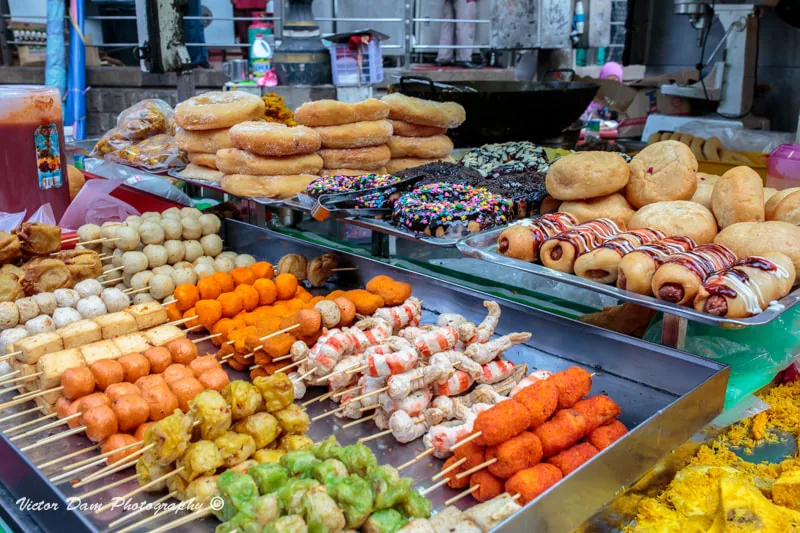
Satay: Charcoal-Grilled Skewers
Small pieces of marinated chicken, beef or lamb grilled over charcoal, served with rich peanut sauce and ketupat (compressed rice). Kajang satay is the most famous. RM 0.80-1.50 per skewer.
Char Kway Teow: Wok-Fried Noodles
Flat rice noodles, prawns, eggs, Chinese sausage and bean sprouts, stir-fried at very high heat. The secret is "wok hei" — the smoky flavour only extreme heat can give. Penang's version is considered the best. RM 6-10.
Laksa: The Iconic Noodle Soup
Two great families: Penang's asam laksa (sour fish broth with pineapple and mint) and Sarawak laksa (creamy with coconut milk). Both are an umami and spice festival. RM 8-15.
Roti Canai: The King of Breakfast
A thin dough stretched and folded, cooked on a griddle, served with curry. Watching the "roti maker" spin the dough is a show in itself. RM 1.50-3 — the cheapest street food in the country.
And Also...
- Nasi kandar: rice with a selection of curries, drenched in sauces (Penang speciality)
- Hokkien mee: thick noodles in a rich prawn broth
- Rendang: beef slow-cooked for hours in coconut milk and spices
- Durian: the king of fruits, creamy and powerful — a rite of passage
- Cendol: the iced dessert with palm sugar, perfect against the heat
- Teh tarik: the "pulled tea", the national drink
Hawker Centres: The Heart of Street Food
The hawker centre is the supreme institution. You'll find dozens of stalls around shared tables, each specialising in one or two dishes.
In Kuala Lumpur:
- Jalan Alor: the city's most famous food street
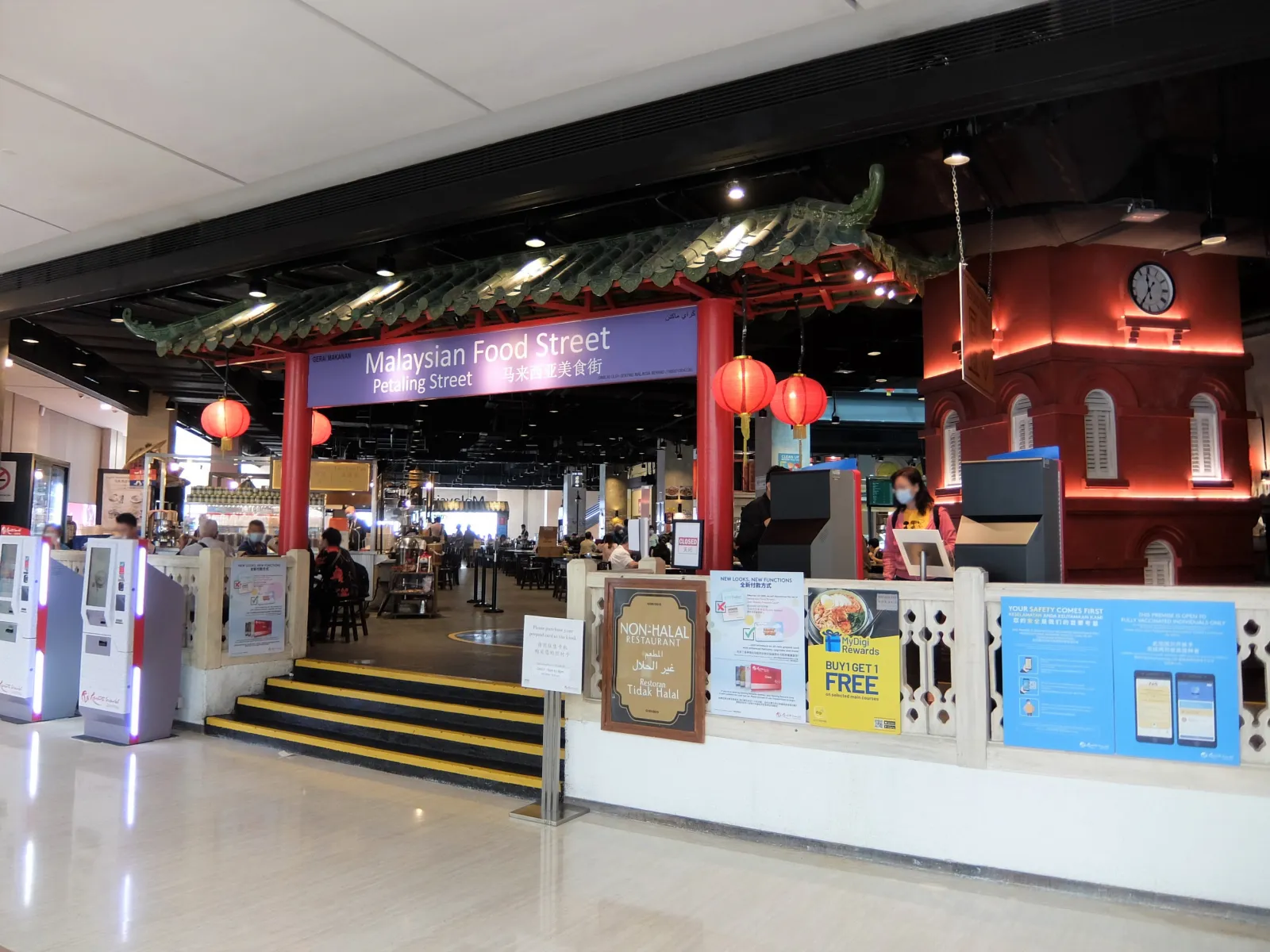
- Petaling Street (Chinatown): soups, noodles, tropical fruits
- Kampung Baru: the authentic Malay quarter — nasi lemak, rendang, satay
- SS2 Petaling Jaya: durian paradise and modern hawker centres
In Penang (the street food temple):
- Gurney Drive: the seaside hawker centre
- New Lane: the local night market
- Lebuh Chulia: the backpacker quarter, open 24/7
In Malacca:
- Jonker Street: the historic quarter, cendol and chicken rice balls
Night Markets: The Ultimate Experience
The pasar malam (night market) is each neighbourhood's weekly event. Between 5pm and midnight, dozens of stalls set up: street food, tropical fruits, clothing, crafts. It's the most authentic local experience. KL's Taman Connaught market (Wednesday) is the longest in the country with over 700 stalls.
Tips to Eat Like a Local
- Follow the locals: a stall full of Malaysians at 2pm is a good stall
- Eat early: the best portions go first
- Bring cash: most hawkers don't accept cards
- Ask for "sedikit pedas" if you can't handle chilli: it means "a little spicy"
- Taste each stall's sambal: it's often the chef's secret
- Eat with your hands for nasi lemak (right hand!): the authentic experience
- Check displayed prices: in tourist areas, ask before ordering
Traps to Avoid
- Too "pretty" restaurants: menus translated in 10 languages = tourist trap
- Inflated prices: at Jalan Alor or Petaling Street, compare with neighbouring stalls
- Doubtful pre-cut fruit: prefer fruit cut in front of you
- Unfiltered water: drink bottled water or fresh juices made before you
How Much Does Street Food Cost?
- Main dish (nasi lemak, char kway teow, laksa): RM 5-12
- Satay skewers: RM 0.80-1.50 each
- Roti canai: RM 1.50-3
- Dessert (cendol, ice kacang): RM 3-6
- Teh tarik: RM 2-4
- Local beer: RM 12-18 per large bottle
A full meal rarely costs more than RM 20 (€4) per person. This is why Malaysia is ranked among the world's best gastronomic destinations on a tight budget.
Regional Specialities
West coast: nasi ulam (Kedah), asam laksa and char kway teow (Penang), bak kut teh (Klang), Ipoh chicken and bean sprout chicken (Perak).
East coast: nasi kerabu (blue rice with herbs), nasi dagang, khao jam — a spicier Malay cuisine influenced by neighbouring Thailand.
Borneo: Sarawak laksa and kolo mee (Kuching), hinava (raw fish marinated in lime, Kota Kinabalu), and tuak (local rice wine).
Frequently Asked Questions
Is street food safe in Malaysia?
Yes, hygiene standards are generally good in hawker centres. Choose clean, busy stalls — Malaysians eat there every day.
Do I need to tip?
No, tipping is not expected in hawker centres. Some restaurants include a 10% service charge.
Are there vegetarian options?
Yes! Indian cuisine offers many vegetarian dishes (dosai, thali, vegetable curries).
What is the best time to eat?
Hawker centres are active from 7am to midnight. Breakfast (6-10am) is perfect for nasi lemak; dinner (6-9pm) is the liveliest time.
Conclusion
Malaysian street food is an experience to be lived at every meal. From the bustling hawker centres of Kuala Lumpur to the night markets of Penang, the country offers exceptional culinary diversity for a tiny budget.
Our advice: leave your preconceptions behind and taste everything. If you're planning your trip, BonjourMalaisie offers private transfers from the airport to your hotel — you can start your food exploration as soon as you arrive.
Selamat makan! (Enjoy your meal!)
Ready to explore Malaysia?
Book your transfer, plan your trips and find the right contacts.
You may also like

Langkawi: Beaches, Islands and Budget
A complete guide to Langkawi: the best beaches (Cenang, Tengah, Tanjung Rhu), island hopping and the Kilim mangroves, the SkyCab cable car, real daily budget, weather and practical logistics to plan your trip.

Working in Malaysia as a Foreigner: Work Permits, Salaries and Hiring Sectors (2026)
Complete 2026 guide to working in Malaysia as a foreigner: Employment Pass categories, salary thresholds, sectors hiring foreigners, employer steps and real-world salaries.

Diving and Snorkelling in Perhentian and Tioman: The Complete Guide
The complete guide to diving and snorkelling in Perhentian and Tioman: which island to choose, best season, must-dive sites, real 2026 prices, where to stay and how to get there from Kuala Lumpur.