
Long-Term Social Visit Pass (LTSVP)
Extended stay pass for family visits, retirement, and long-term social visits to Malaysia
Overview
Eligibility
Malaysian Sponsor Required
The applicant must have a Malaysian citizen or permanent resident sponsor who is responsible for the applicant during their stay. The sponsor must provide a supporting letter and identification documents.
Maximum Stay Duration
The LTSVP is typically granted for a period of 1 to 5 years depending on the applicant''s circumstances. For spouse of Malaysian citizen, the pass can be up to 5 years. For other categories, typically 1 year.
Nationality Requirements
Open to all nationalities. However, certain nationalities may face stricter scrutiny or additional documentation requirements based on Malaysia''s immigration policies.
No Employment Rights
LTSVP holders are not permitted to work in Malaysia. However, for spouses of Malaysian citizens, a special work endorsement can be applied for, allowing limited employment.
Financial Self-Sufficiency
The applicant must demonstrate sufficient financial resources to support themselves during their stay in Malaysia without recourse to public funds. Bank statements showing minimum RM 10,000 in savings are typically required.
Health Insurance Coverage
Applicants must have valid medical insurance that covers treatment in Malaysia. The insurance policy must be from a provider recognized in Malaysia.
Required Documents
Valid Passport
A valid passport with at least 18 months of remaining validity and at least two blank visa pages. All pages must be scanned.
Passport-Sized Photographs
Two recent passport-sized colour photographs (35mm x 45mm) with a white background.
Sponsor''s MyKad or Identification
Copy of the Malaysian sponsor''s MyKad (identity card) for citizens, or MyPR (permanent resident card) for permanent residents.
Sponsor''s Support Letter
A formal letter from the Malaysian sponsor confirming their responsibility for the applicant during the stay in Malaysia, including accommodation and financial support.
Proof of Relationship
For spouses: marriage certificate. For parents: birth certificate of the Malaysian child. For children: birth certificate showing Malaysian parent. For other relationships: relevant proof.
Financial Proof
Bank statements or financial documents demonstrating the applicant''s ability to support themselves, typically showing minimum RM 10,000 in available funds.
Health Insurance Policy
A valid medical insurance policy that provides coverage in Malaysia for the duration of the intended stay.
Process
Identify the Appropriate LTSVP Category and Prepare Documents
The first step is to identify which LTSVP category applies to your situation. The main categories are: foreign spouse of a Malaysian citizen, parent of a Malaysian citizen, parent of a foreign child studying in Malaysia, foreign spouse of a long-term pass holder (such as an Employment Pass or RP-T holder), individual requiring extended medical treatment in Malaysia, or retiree who does not qualify for MM2H. Once the category is identified, gather all required documents. For spouse applications, you will need the original and certified copy of your marriage certificate, your spouse's MyKad (identity card), and a letter of sponsorship from your spouse. For parent applications, you will need your child's birth certificate and MyKad, a sponsorship letter, and proof of relationship. For all categories, you need a valid passport with at least 18 months validity, recent passport-sized photographs, proof of financial means (bank statements, pension statements, or a letter from your sponsor confirming financial support), and a medical report from an approved clinic or hospital in Malaysia. Police clearance certificates may be required in certain cases.
Obtain Sponsorship and Supporting Letters
Every LTSVP application requires a sponsor in Malaysia who is either a Malaysian citizen or a holder of a valid long-term pass. The sponsor plays a crucial role in the application process. For spouse applications, the Malaysian spouse acts as the sponsor and must provide a letter of sponsorship addressed to the Immigration Department, confirming the marriage, the spouse's good character, and the sponsor's financial responsibility for the applicant during their stay in Malaysia. The sponsor must also provide copies of their MyKad (both front and back) and any other identification documents. For parent applications, the Malaysian child acts as the sponsor. For parents of foreign students, the student's parent who holds a work pass may act as the sponsor. The sponsor letter should be notarised or witnessed by a Commissioner of Oaths for added authenticity. The sponsor must also demonstrate sufficient financial means to support the applicant, typically by providing recent bank statements, salary slips, or EPF statements.
Submit Application to Immigration Department
The LTSVP application is submitted to the Malaysian Immigration Department. Depending on your location and the category, the application can be submitted at the Immigration Department headquarters in Putrajaya, the state Immigration Department office where the sponsor resides, or through the ESD / Xpats Gateway system for certain categories. The application form (Form IMM.47 or the relevant LTSVP form) must be completed accurately and signed by both the applicant and the sponsor. All supporting documents must be submitted together with the application form. Bring original documents for verification, along with certified copies. The immigration officer will review the application for completeness and may ask questions about the purpose and duration of the stay. After the review, the officer will provide a payment slip for the processing fee, which is typically RM 500 to RM 1,000 per year of the pass applied for. Payment can be made at the Immigration Department cashier or via online banking. Upon payment, the application is formally accepted, and you receive a receipt and an application reference number.
Immigration Department Processing and Verification
The Immigration Department processes the LTSVP application, which includes several stages of review and verification. First, the application undergoes an initial screening to ensure all required documents are present and properly completed. Next, the immigration officers verify the documents, including confirming the authenticity of the marriage certificate (for spouse applications) through the National Registration Department (JPN) database, checking the sponsor's identity and status, verifying the applicant's immigration history in Malaysia, and conducting background checks through relevant databases. The immigration officers may request additional documents or clarification if any aspect of the application requires further substantiation. Common reasons for additional requests include unclear or insufficient financial documentation, discrepancies in relationship documents, missing translations, or insufficient passport validity. The processing time varies by category: spouse LTSVP applications typically take 4 to 8 weeks, while parent applications may take 6 to 12 weeks. Delays can occur if additional verification is needed or if there are concerns about the application.
Approval and Payment of Processing Fee
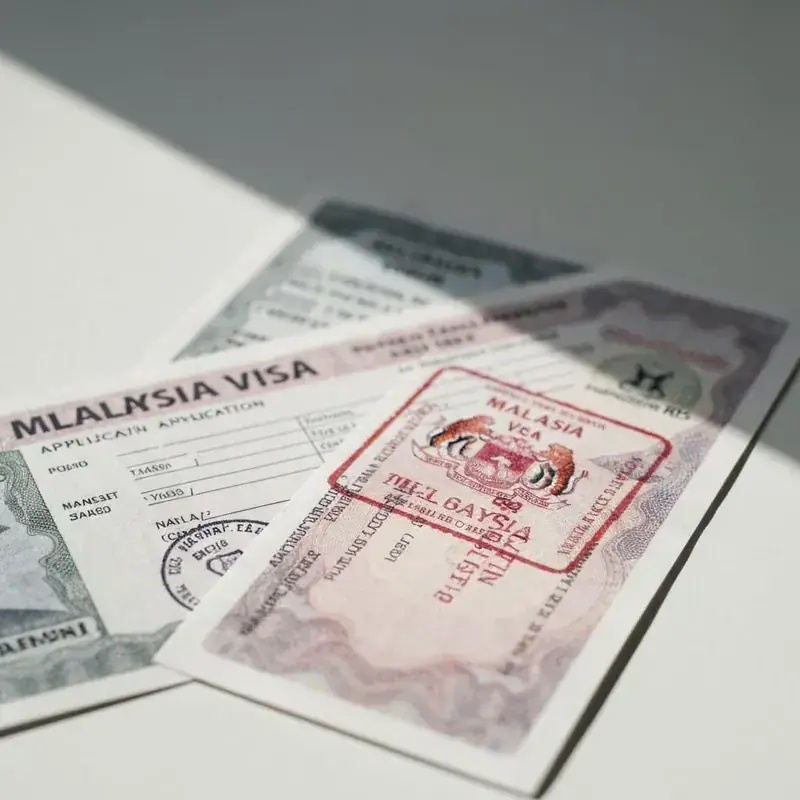
If the application is approved, the Immigration Department issues an approval letter specifying the validity period of the LTSVP, any conditions attached to the pass, and instructions for the next steps. The approval letter typically requires you to pay the LTSVP issuance fee, which is separate from the processing fee paid at submission. The issuance fee is typically RM 500 per year of the pass validity. Payment can be made at the Immigration Department cashier or via the online payment portal. After payment, you will receive an official receipt, and the LTSVP will be endorsed into your passport. The endorsement may be in the form of a sticker or a stamp, depending on the Immigration Department's current practice. If you applied from outside Malaysia, the approval letter enables you to obtain a Single Entry Visa (SEV) from a Malaysian embassy or consulate to enter Malaysia. Upon arrival, you must report to the Immigration Department for the LTSVP endorsement.
Pass Endorsement and Ongoing Compliance
The final step is the physical endorsement of the LTSVP into your passport. Present your passport and the approval letter to the Immigration Department office where you submitted the application (or the designated office for endorsement). The immigration officer will affix the LTSVP sticker or stamp into your passport and record your entry into the immigration system. Verify that all details on the endorsement are correct, including your name, passport number, validity dates, and any conditions. If the pass includes multiple-entry privileges, ensure this is reflected. After receiving the LTSVP, you must comply with all conditions of stay. The most important condition is that you are strictly prohibited from working in Malaysia unless you obtain a separate work permit. You must also ensure you do not overstay the validity period. To renew the LTSVP, submit a renewal application before the pass expires, typically 1 to 2 months before expiry. The renewal process is similar to the initial application but may be streamlined if there are no changes in circumstances.